
Nǐ hǎo!
croatian.cri.cn
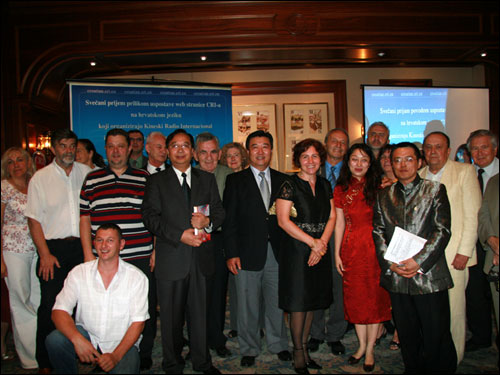
At the opening ceremony in Zagreb, 2nd July 2008, launching croatian.cri.cn. China Radio International (CRI) was founded in 1941. Since 1998 it is also active via WWW, and now has as many as 53 web sites in various national languages, including Croatian.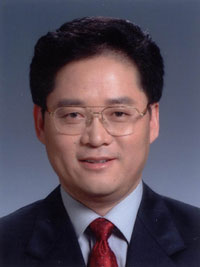
Mr. Wang Gengnian, president of the China Radio International.
Below is his address to the visitors of croatian.cri.cn written, of course, in Croatian language.
|
Dragi prijatelji iz Hrvatske,
Dobro do1li na hrvatsku web-stranicu Kineskog Radio Internacionala! Srdaeno vas pozdravljamo iz Pekinga! Kineska stara izreka ka 3/4 e da “Medusobnim upoznavanjem, bez obzira na daleko ili blizu, i najveaea udaljenost mo 3/4 e postati susjedstvo.” Iako su Hrvatska i Kina geografski udaljene jedna od druge, narodi dviju zemalja njeguju duboko medusobno prijateljstvo te neprekidno jaea suradnja dviju strana. Radi jo1 boljeg razumijevanja i suradnje, Kineski Radio Internacional je uspostavio web-stranicu na hrvatskom jeziku. Na1a web-stranica aee vam detaljno i toeno predstavljati kinesku kulturu, razvoj dru1tva, suradnju i medusobne kontakte izmedu Hrvatske i Kine na svim podruejima. Kina vi1e nije “daleka”, veae zemlja pred va1im oeima! Srdaeno vas pozivamo da posjetite hrvatsku web-stranicu Kineskog Radio Internacionala! Ravnatelj CRI, Wang Gengnian |
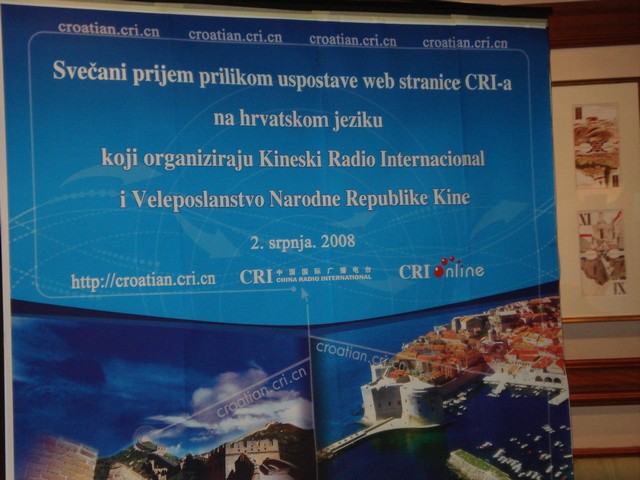
A solemn reception on the occasion of launching web pages of CRI
in Croatian language
organized by China Radio International
and the Embassy of the People’s Republic of China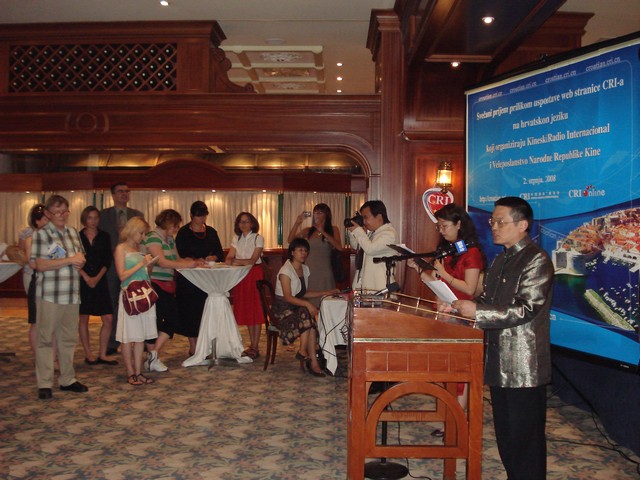
A detail from the opening ceremony in Sheraton hotel in Zagreb, Croatia. The web page croatian.cri.cn covers bilateral relations between Croatia and China, and provides information about China, Chinese culture, sport, music, toursim. There is also a tutorial written in Croatian for learning Chinese language. I recommend you a section Music Online, devoted to Chinese folk music and classical instruments. Of course, there is plenty of information about forthcoming Olympic Games.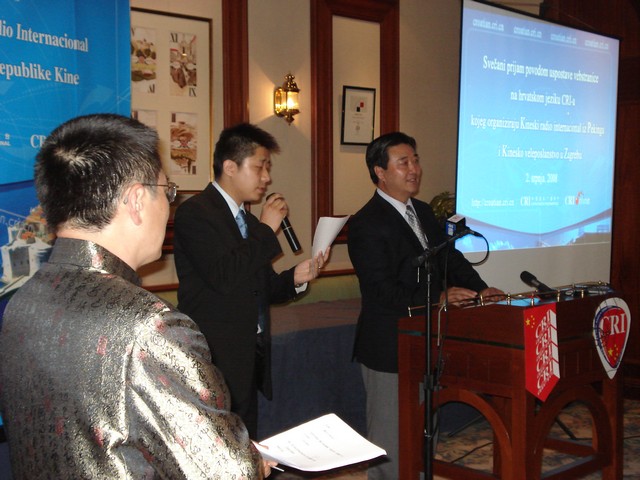
H.E. Mr. Wu Lianqi, ambassador of P.R. of China in the Republic of Croatia, in his address on the occasion of opening the first Chinese web site in Croatian language.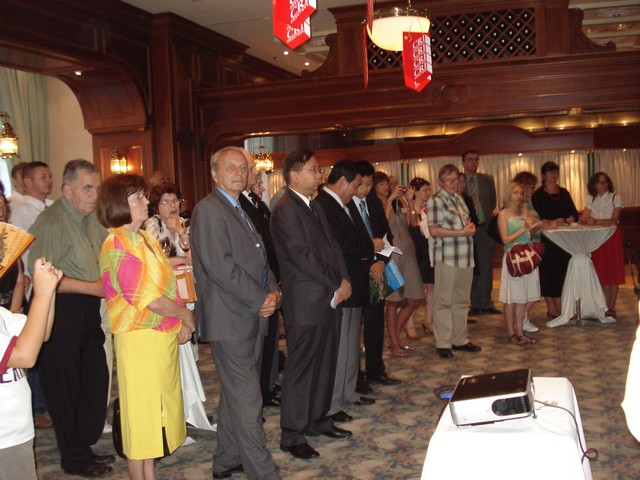
Distinguished guests in the audience, including the personnel of the Embassy of the P.R. of China.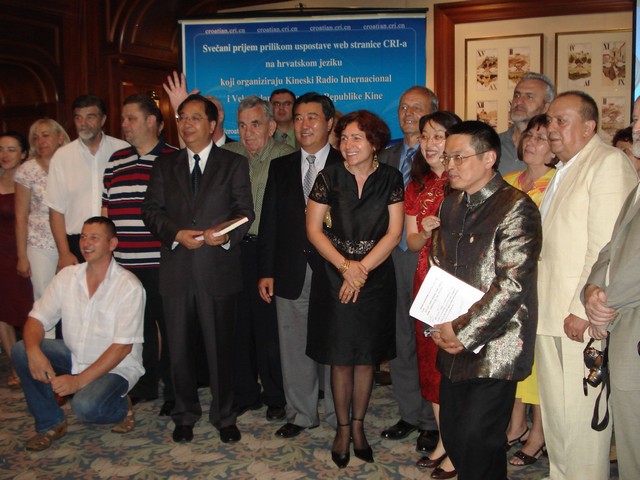
The web site croatian.cri.cn is born! It is the first one in China published in Croatian language.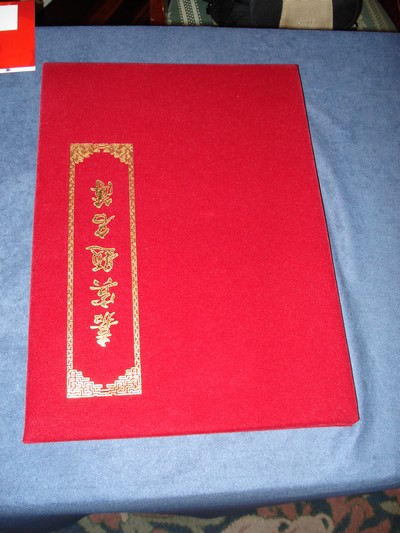
The Guest Book was signed by all who attended the ceremony of official opening of croatian.cri.cn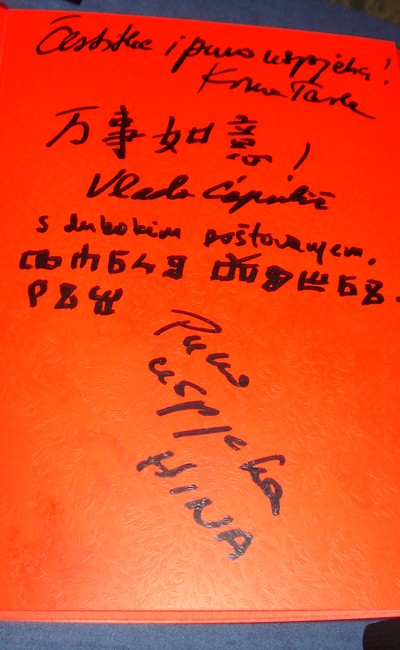
A page from the Guest Book with a few signatures: Professor Vlado AEepuliae signed himself in Chinese, while the auther of these lines signed in Croatian Glagolitic Script.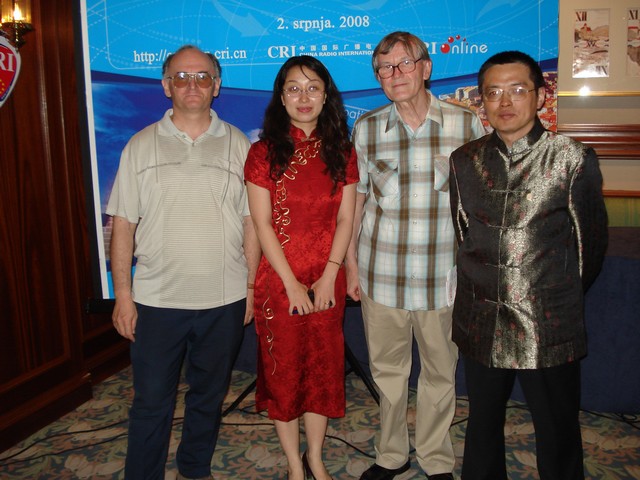
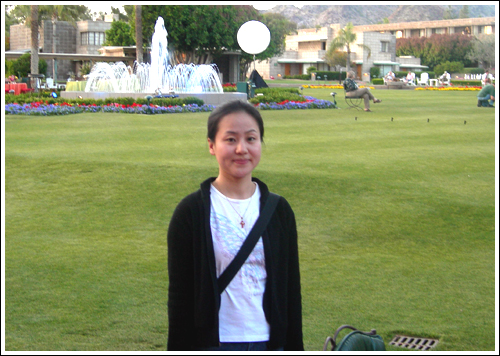
The ceremony in Zagreb was a nice occasion for friendly contacts and discussions. Mrs. Qu Huibin speaks Croatian, and likes the town of Opatija very much. Her Croatian name is Helena. She is employed at croatian.cri.cn on questions regarding economy.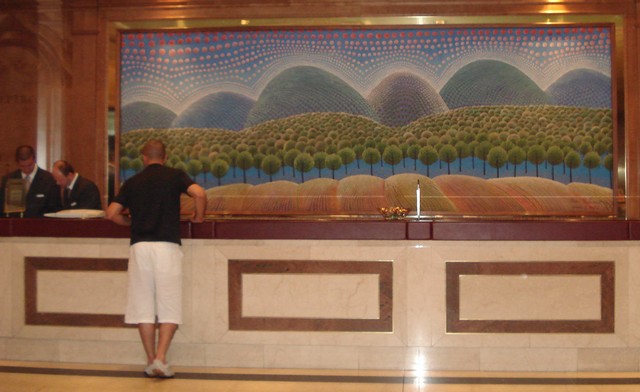
The opening ceremony was held in the Sheraton hotel in Zagreb, which has the reception desk decorated with fantastic work of art by Ivan Rabuzin.
Please, go to the next page below.


Mario
Tian Ju

Wang Mu
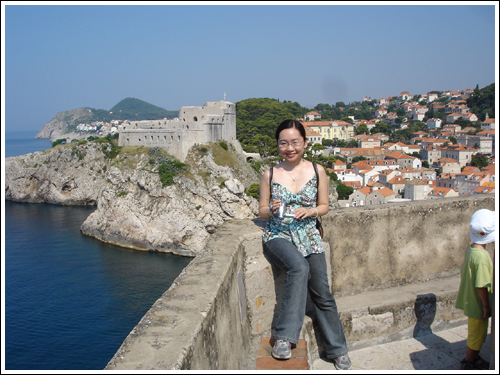
Wang Ping in Dubrovnik, Croatia
Contact:
croatian.cri.cn
e-mail: [email protected] , tel: +86-10-6889 2091
Please, go to the next page below.
Croatia – China
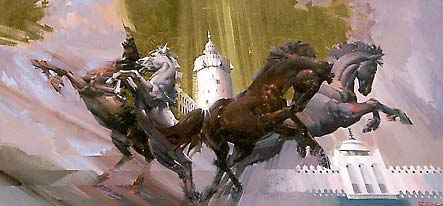
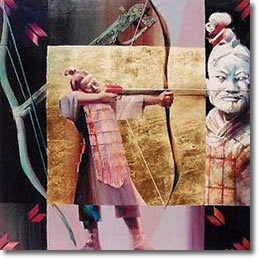
SportsCharles Billich is outstanding Croatian painter born in Lovran in Istria, and since 1956 working in Australia. He is Honorary Citizen of Atlanta, Centennial Olympic City, USA, since 1996. Billich was the official artist of the Australian Formula 1 Grand Prix Melbourne in 1996. In 1997 he was designated the official artist of the Australian and French Olympic teams for Olympic Games in Sydney in 2000. He was elected the official painter of Australian and the USA national teams at Olympic Games in Greece, 2004. In 2004 he was elected the Official Artist of the 2008 Beijing Olympiad. Billich’s painting entitled Beijing Cityspace was the official image used by the Beijing Olympic Organizing Committee in its bid to host the 2008 Olympic Games. He also conceived a series of sensational images based on the “Bing Ma Yong” terracota warriors, imbuing them with a new life and everlasting future, see the Chinese TV web page and Charles Billich for more details. Charles Billich’s Bing Mah Yong cycle of paintings for the needs of the 2008 Beijing Olympiade was so well received that his paintings are represented on a collection of 16 postage stamps currently in circulation in China. Here are some of his collections related only to sports:
More information about Billich’s recent work in China
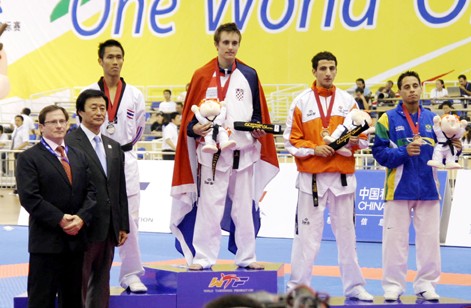
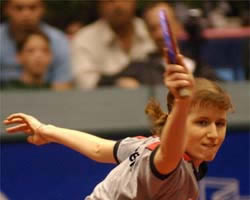
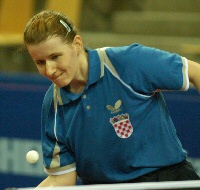
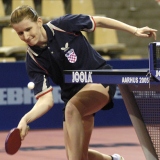
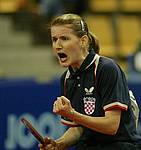
Filip Grgic won gold medal at the 2007 Bejing WTF World Taekwondo Championships in male bantamweight (under 62kg) category, China. Photo from www.wtf.org. Tamara Boros was the best ping-pong player in the world among women of non-Chinese origin for 1998 and 1999 (ranked 13th, the first 12 places being occupied by Chinese players, as well as many places after Tamara). She is famous for her attractive offensive style. She was the winner of the 2002 TOP 12 European ping-pong competition in Rotterdam. After this success she was placed second (!) on the world rank. She won the third place at the World Championship in Paris in 2003, which is the greatest success of Croatian (and European!) table tennis for women.
She also won the 2006 Europe TOP 12 competition in Copenhagen.
Tamara is the only one in Europe capable to cope with ping-pong players from Asia (China, Japan, etc.). In 2006 she has been invited to China to play table tennis in their professional league, which is the strongest one in the world.
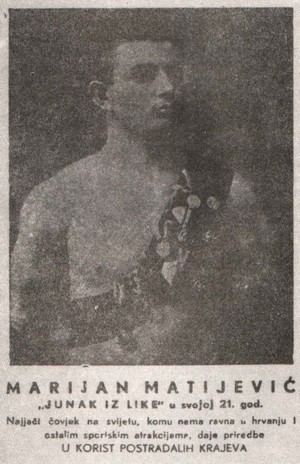
Outstanding Croatian wrestler (“Junak iz Like” – Hero from Lika) was Marijan Matijevic (1878-1951). Matijevic traveled throughout the world to exhibit his extraordinary physical power (bending metal rods, stone breaking), including China and Japan. He is known to have surpassed Primo Carnera from Italy. Buried in the town of Zupanja near Danube. He is known for his numerous humanitarian public performances. Matijevic was enormously popular, which can be seen from thousands of articles published throughout the world in English, German, French, Italian, Spanish, Arabian, Turkish, Chinese, Japanese and other languages. Once in the USA, when he was once introduced as an “Austrian athlete”, he hastened to correct the announcer: “Dear gentlemen, I am not Austrian, I am Croatian born in proud Lika…”. Source: Croatian sport |


DollsThe King of Dolls, a famous Croatian collector of dolls representing various countries and cultures throughout the world, received upon his request a doll from Mao Tse Tung, president of China, in 1966. The doll is kept in the Ethnographic Museum in Zagreb, Croatia, among more than 300 other dolls. |
Literature
Ivana Brlic Mazuranic (1874-1938) is a very well known name among Croatian children. She wrote beautiful books of Croatian fairy tales, the most famous being Price iz davnine (Tales of Long Ago) that appeared in Zagreb in 1916. It was translated from Croatian into English by F.S. Copeland under the title:
and published in 1924. in London by George Alen & Unwin Ltd (260 pp, hardcover). These stories have become popular worldwide due to recent fantastic flash-art presentations, initiated by Helena Bulaja, Zagreb. See for example Neva, music and animation by Ed Beals. Books of Ivana Brlic Mazuranic were translated into all major world languages (more information in Croatian). Except in English, there exist also translations into
Source: Croatian Art |
Science
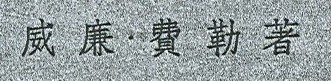
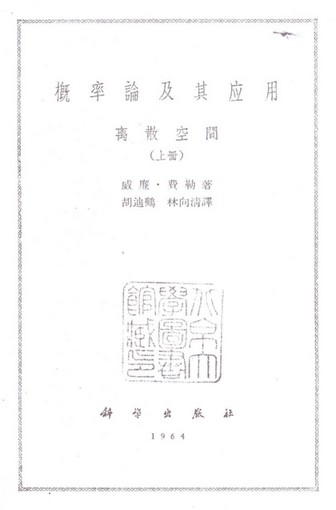
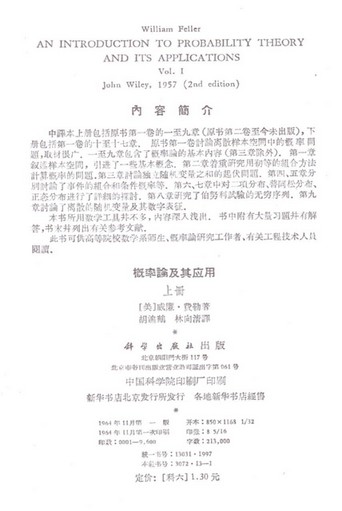
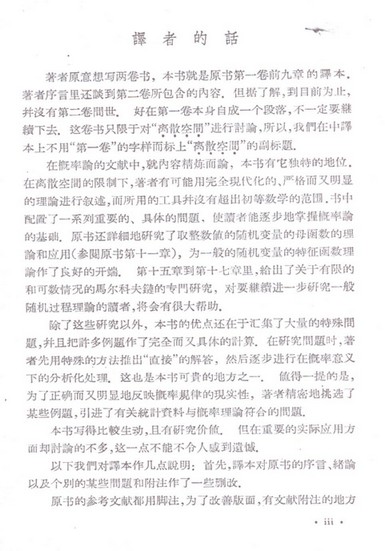
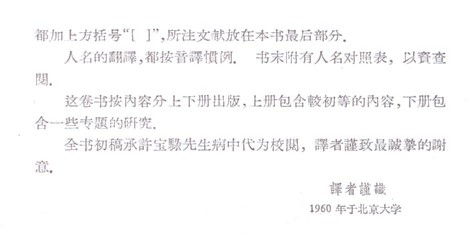
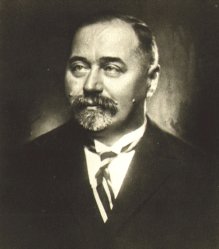
William Feller (Zagreb, July 7th, 1906 – New York, January 14th, 1970), outstanding Croatian – American mathematician, born in Croatia as Vilibald Srecko Feller. As a student he changed the name to Vilim. Graduated in mathematics from the University of Zagreb (1925), earned his PhD in Göttingen (1926) under Richard Courant. He prepared a part of his thesis already as a student in Zagreb. Professor in Kiel (Germany, 1928-1933), Copenhagen (Denmark, 1933-1934), Stockholm, and Lund (Sweden, 1934-1939). In 1938 he married Clara Nielsen. Since 1939 lived in the USA, employed at Universities of Brown, Cornell, and since 1950 at Princeton University as a Eugen Higgins Professor of mathematics. Feller wrote the review of A.N. Kolmogorov’s famous book Grundbegriffe der Wahrscheinlichkeitsrechnung for Zentralblatt für Mathematik in 1934. One of initiators of editing Mathematical Reviews (1939), and one of its first executive directors (1944-1945). One of the founders of Probability Theory as a scientific discipline, best known for his two volume monograph An Introduction to Probability Theory and Its Applications, which is considered as one of the finest mathematical textbooks of the 20th century. It was translated into Russian (with foreword to Volume 1 written by Kolmogorov), Chinese, Spanish, Polish, and Hungarian. About hundred and fifty mathematical notions bear his name: Feller process, Feller transition function, Feller semigroup, Feller’s property, Feller Brownian motions, Feller’s test for explosions, Lindeberg-Feller condition, Feller operator, Feller potential, Feller measures, indefinite Krein-Feller differential operators, Kolmogorov-Feller equation, etc. At the International Congress of Mathematicians held in 1958 in Edinburgh, Feller delivered a plenary talk “Some new connections between probability and classical analysis.” In 1966 he was elected to the international scientific committee which had to choose candidates for the 1966 Fields Medal at the International Congress of Mathematicians in Moscow. Feller had 17 PhD students. Member of several national academies: former Yugoslav (now Croatian) Academy of Sciences and Arts in Zagreb, Royal Danish Academy of Sciences, National Academy of Sciences, USA, American Academy of Arts and Sciences, Boston, and of prestigeous scientific organizations: Royal Statistical Society, London, and The London Mathematical Society (honorary member). Recipient of the 1969 National Medal of Science by the president of the USA (posthumously in 1970). An asteroid was named after him in 1996: 21276 Feller (1996 TF5). Chinese edition Feller, William K’ai-lü-lun chi ch’i yin-yung. Ts’e I. (Chinese) [Probability theory and its applications. Vol. I] Translated from the English by Hu Ti-ho and Lin Hsiang-ching Science Press, Peking 1964. xii+253 pp.
William Feller
Many thanks to Professors Sibe and Pavao Mardesic for the above pages of Feller’s book in Chinese, 1964, kept in the Library of the School of Mathematical Sciences in Beijing. The 1964 edition has been printed in 9,600 copies, and subsequent Chinese editions seem to exist:
Photo from Book.ChinaUnix.net The second volume of Feller’s monograph has been issued in Chinese in 2007:
William Feller: An Introduction to Probability Theory and Its Applications, Volume 2, Chinese edition, 612 pp, ISBN 978-7-115-16735-4, source www.turingbook.com Feller’s father Eugen-Viktor initiated the industrial production of Elsa fluid and its variants (soaps, shampoos, shaving creams, balsams, hygienic and cosmetic products, elixirs, etc.) in Croatia, which was a world wide success, sold in the whole of Europe, Asia (Japan and China), Africa (Egypt), and in the USA. Source: William Feller, outstanding Croatian – American scientist Around 1740 Franz or Franz-Luka Jelaeiae, born in 1720 in Vienna, died in Moscow after 1776. He demanaged to St. Petersburg in Russia, where he studied medicine and earned his diploma in 1743. As an expert in medicine he participated in three expeditions in China (1747, 1754-1756 et 1757-1764). In 1756 this Croat was the principal surgeon in the Moscow hospital, and in 1764 he worked as a surgeon in St. Petersburg. Source: Jelaeiae’s in Russia (written in French), by Michelle Iellatchitch, France, translated from French by D.(R). THE RUSSIAN BRANCH OF OUR JELAEIAE’SWritten by STJEPAN RADICHrvatsko Kolo, Zagreb, 1909, p. 278-304. When you open the grand Russain Encyclopedicheskij slovar’ [Encyclopedic dictionary] (ed. Brockhaus-Efron, St. Petersburg, 1894), you will find on p. 636 the following interesting lines: “A Croat Jelacic arrived to Russia around 1740. In 1742 he approached to the main St. Petersburg land hospital as a physician – practicioner, in a year he passed the exam for sub-physician, and just in the course of the next year he was a memeber of the physician’s caravan expedition, which went to China, and where he was under way until 1747. In the beginning of 1754 a new caravan set off to China led by Vladikin, and Jelacic again escorted it as a physician, and besides this the St. Petersburg academy entrusted him to bring interesting books and materials from there, and the medicinal department asked to bring 1/4 pounds [weight] of the root called “zhen-shen” and to investigate properties of the corresponding plant. In Bejing Jelacic obtained 25 lots [weight] of “zhen-shen”, but the leader of the caravan Vladikin took it away from him. Jelacic obtained excerpts from French and Portugese Jesuit descriptions of this root, which among others was described in Documents (Actes) of the French Academy already in 1718. Jelacic returned from this journey in 1756, and then started to work at the main Moscow hospital as an operator. In 1754, by a “Siberian rescript,” a new caravan to China was organized and Jelacic was again appointed to escort it. He returned in 1764, after which he became the operator at the main St. Petersburg hospital at land military…” The name of this Jelacic was Franjo Luka, and he was educated at Viennese Jesuits, from where he escaped to Russia. One of his descendants, Franjo Josipovic Jelacic, was a famous surgeon (1808-1888) and as a university professor of Kazan has a great merit for founding the Kazan clinic, as we learn from the same encyclopedia. As soon as this Franjo Jelacic married with a Pravoslav Russian, he accepted pravoslav faith (according to the laws of the time), and until that time our Jelacic’s were Catholics. The son of Franjo – Aleksandar Francevic Jelacic, was a famous lawyer and the head of exceptionally respected and educated family of Russian Jelacic’s. He had five grown up sons, and two of them were distinguished with their literary and educational work. Russian Jelacic’s preserved their Croatian traditions, and they are especially proud of their famous ban [viceroy] Jelacic. They sojourned already in Opatija, and also visited Zagreb, and of course, the Jelacic monument [on the Zagreb main square] in the first place. Aleksandar Jelacic is a liberal of English character, as was the case with almost all Russian thinkers in the 60s of the last [19th] century. Their sons belong to different political camps, but all of them are very important and extraordinarily educated people. … |




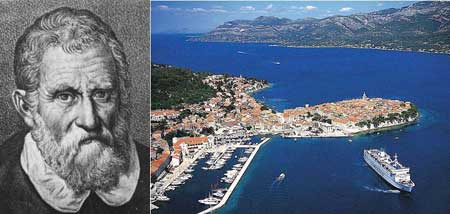
MARKO POLO – KOREULA
 SUMMARY
ETNIC ORIGIN OF THE EXPLORERS POLs (alias POLO-s) Andjelko Nedo Pave1koviae, Montecarlo (Unfortunately only summary of this excellent work is available in English.) Can the explorers POL-s (alias Polo and Pollo) be called “The Venetian Polos”? – contrary to the Venetian documents, which say that they “came from Dalmatia”, a Croatian maritime province. CHRONICON IUSTINIANI, 1358 (annotation) in the Venetian Bibliotheca Marciana. The Venetian manuscripts from: 1423., 1446., 1450/60., and the two documnets from the beginning of the 1600-ies. The Venetian chronicler Marino Sanudo junior writes to that effect in 1522.: “Poli di Dalmatia”. See A. C. Moule: MARCO POLO, THE DESCRIPTION OF THE WORLD (London, 1938), 17, 19, 20. A. C. Moule says: “None of the large number of Venetian genealogies which we have been able to consult seems explicitly to recognize more than one family of Polo, namely “Polo di Dalmatia”. Moule, 20. Giovanni Orlandini, the Venetian authority on our subject writes in 1926., that the genealogy of the Polos is not “chiara” (clear). He asserts that their generalogy is traceable in Venice as from the middle of the XIIIth century. He believes that the Polos had been gradually comming from the Near East ports and settling, after the year 1261., in Venice in the consequence of the downfall of the Near East latin Empire. See G. Orlandini “Marco Polo e la sua familia” in ARHIVIO VENETO TRIDENTINO, vol. IX. 1926., 1-68, especiall pp.: 1-3. A. C. Moule contends that the Pols genealogy can be traced in Venice, starting from the middle of the XIVth century. Moule, 20. Marco Polo the elder writes in his Last Will (Venice, 1280.) that he came from Constantinople. As quoted by moule, 523-524. His brothers, the merchant-travellers Maffeu and Nicolau fetched in 1250. the merchandise from Venice to Constantinople. They sejourned in the Black Sea area from then untill the year 1261. In 1261. They went to Asia and came back in 1269. In 1271., they went from Venice to Asia. Marc Pol the junior the son of Nicolau, (the author of the book), accompanied them on their second journey. (He was born in 1254., and died in 1324.). They returned from Asia in 1295. Then they (definately) settled in Venice. According to Vladimir DePolo, some Croatian manuscripts do mention: “The merchants, shipbuilders, travelers,… (etc) POLOS from Dalmatia, in the Near East ports including Constantinople. (The research paper published in Zagreb 1996. in the collection of the research works, entitled: MARKO POLO and THE EASTERN ADRIATIC IN THE XIIITH CENTURY). Conclusion (One Marco Polo was in the year 1300., among the rebels against the Venetian authorities, who condemned them to exile and then to death. Then the rebels flew to Croatia. Some writers believe that the said Marco Polo-rebel, was is fact the explorer Marc Pol himself.). Andelko (Nedo) Pave1koviae: Putopisac Marko Polo, POLJICA, br. 23, 38-66, Split 1998. Source: www.ikorcula.net/marcopolo A 14th century document linking Marco Polo with Dalmatia A copy of the 14th century British Museum Additional MS 12475 linking Marco Polo with Dalmatia. Line against shield with 4 birds “(P)olo, questi veneron orrigamente de dalmatia”. Polo, this man originally came from Dalmatia. 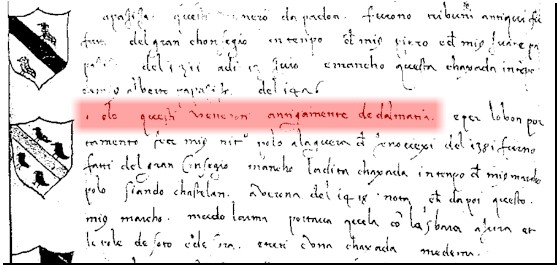 Document is presented to the Marco Polo Centre Korcula – Croatia on Sept. 7th 1998 by James A. Gilman on behalf of Europa-Youth. Source: www.ikorcula.net/marcopolo
Marko Polo – turistieki simbol Koreule Najveaei putnik svih vremena, Marko Polo rodio se, prema mnogim ozbiljnim izvorima (ukljueujuaei i Enciclopediu Britannicu – najnovije izdanje iz 2003. g.), u Koreuli 8. sijeenja 1254. godine. Kao djeeak od 17 godina oti1ao je sa svojim ocem Nikolom i stricem Matom, poznatim trgovcima, na veliko putovanje po Putu svile stigav1i do dvora moaenoga mongolskoga vladara Kublai Khana. Svojim izgledom i inteligencijom zadivio je tada1njega najmoaenijega vladara na svijetu i on ga je primio u mongolsku diplomatsku slu 3/4 bu u kojoj je postigao zavidne rezultate. Polovi su se vratili u Europu 1295. godine i 3/4 ivjeli su u Veneciji gdje su se i dalje bavili trgovinom iako su se veae obogatili na svom dugogodi1njem putovanju po Dalekom Istoku. Marko Polo 7. rujna 1298. g. kao zapovjednik mletaeke galije, sudjeluje u najveaeoj pomorskoj bitci srednjega vijeka, onoj izmedu Venecije i Genove, koja se zbila pred Koreulom. U tom okrutnom pomorskom boju 7000 Mleaeana je poginulo, a 7400 zarobljeno, eime je Venecija do 3/4 ivjela poraz od kojega aee se dugo oporavljati. Medu zarobljenicima bio je i Koreulanin Marko Polo, koji je, nakon eetiri dana u koreulanskoj tamnici, proveo godinu dana u denovskom zarobljeni1tvu. Tamo je diktirao svoje pustolovine i do 3/4 ivljaje u Kini svome zatvorskom sudrugu, Rustichianu da Pisi na francuskom provansalskom jeziku. Tako je nastala poznata putopisna knjiga pod naslovom < Ta Polova knjiga otkrila je tada zaostaloj Europi jednu razvijenu i moaenu kinesku civilizaciju, a mnoga Markova zapa 3/4 anja o stvarima i pojavama u Kini doimala su se kao razigrana ma1ta talentiranoga pisca. On je u noj, izmedu ostaloga, govorio o gradu Kinsai s 10000 mostova i grijanim ulicama s bajkovitim palaeama i vrtovima, o sustavu po1ta konjskom zapregom koja je izuzetno djelotvorno funkcionirala, o papirnatom novcu, o nafti kao izvoru energije, o eudotvornim ljekovitim travama, o bogatim tkaninama svih vrsta, boja i desena, nalazi1tima zlata i dijamanata, mirodijama, neobienim 3/4 ivotinjama, tehnikama ratovanja i vladanja, suzbijanju inflacije i krivotvorenja pomoaeu neizbrisivoga kraljevskoga 3/4 iga – o stvarima o kojima Europa nije mogla ni sanjati. Markova knjiga, “Euda svijeta”, eitala se na kraljevskim dvorovima i u plemiaekim palaeama s velikim u 3/4 itkom i zanimanjem, a danas se smatra najveaeim putopisom u svjetskoj knji 3/4 evnosti. Na talijanskom je dobila naslov Il millione (Milijun), vjerojatno zbog velikih brojki kojima je Marko opisivao svoje do 3/4 ivljaje, a na engleskom The Travels of Marco Polo (Putovanja Marka Pola). Ona je poslu 3/4 ila i kao predlo 3/4 ak za brojne moderne romane (Colerus, Jennings, Sharp, Griffiths) igrokaze, opere, filmove i mjuzikle (Duka). Na samrtnoj postelji Marka Pola pitali se njegovi prijatelji zbog eega je napisao i isprieao toliko neistina, a on im je kratko odgovorio: Marko Polo postao je legenda Koreule i njezin najprepoznatljiviji imid 3/4 . O njemu, kao Koreulaninu, pi1u brojne revije i novine, snimaju se dokumentarni filmovi (film < Turistieka zajednica Grada Koreule osnovala je “Medunarodni centar Marko Polo” za istra 3/4 ivanje i promicanje 3/4 ivota i djela toga prvoga turiste i eovjeka koji je bio daleko ispred svoga vremena i koji je 3/4 ivio najzanimljivijim moguaeim 3/4 ivotom. Source: www.ikorcula.net/marcopolo
Source for the entire collection: www.ikorcula.net/marcopolo
|

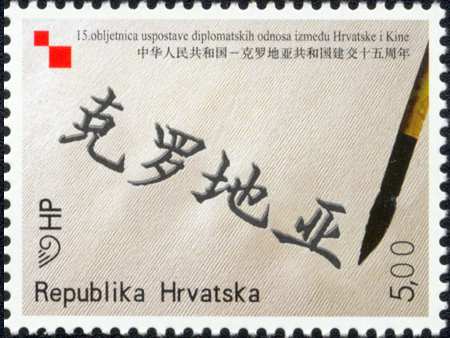
Chinese and Croatian postage stampsTwo very nice postage stamps have been issued by Croatian Post on the occasion of 15 years since establishing diplomatic relations between the China and Croatia (1992-2007). Both stamps have been designed by Boris Ljubieiae, one of the best Croatian designers.
 |

| Kineske izreke i priee – Chinese sayings and stories, translated from Chinese into Croatian by prof.dr. Vladimir AEepuliae, Zagreb |
Formated for CROWN by prof.dr. Darko (R)ubriniae
Distributed by www.Croatia.org . This message is intended for Croatian Associations/Institutions and their Friends in Croatia and in the World. The opinions/articles expressed on this list do not reflect personal opinions of the moderator. If the reader of this message is not the intended recipient, please delete or destroy all copies of this communication and please, let us know!