Blog

  • Croatian Statehood Day, 30th May

    Croatian Statehood Day, 30th May

    Author: Nenad N. Bach and Darko ubrini

    May 30, 2024

    Croatia Statehood Day, 2024

    Google’s Doodle celebrates Croatia’s Statehood Day. On May 30,1990, Croatia established its first democratically-elected, multi-party parliament.

    Despite forming its parliament, Croatia couldn’t immediately separate from the former Yugoslavia. A year later, parliament finally gained the power to declare independence on June 25, 1991, after 93% of citizens voted for Croatia to become a sovereign state. This event holds the record for the largest voter turnout in Croatian history and is considered one of the most significant Croatian historical events.

    Statehood Day commemorates the country’s transition to democracy, and Croatians celebrate by attending family reunions, picnics and barbeques. Public officials also lay memorial wreaths at various landmarks to honor the fallen soldiers who fought for freedom.

    Happy Statehood Day, Croatia! Or shall we say – Dan dravnosti!

    30 May – Statehood Day

    Statehood Day is marked in memory of the constitution of the first democratically elected multi-party Parliament on 30 May 1990.

    At the constitution of the new Parliament of the Socialist Republic of Croatia, which was attended by numerous guests from homeland and expatriate Croatia together with the representatives of religious communities, arko Domljan was elected the Speaker of the Parliament and Ivica Percan, Stjepan Sulimanac and Vladimir eks were appointed deputy speakers.

    Stjepan Mesi was elected the President of the Executive Council of the Parliament, and Franjo Tuman the President of the Presidency of the Socialist Republic of Croatia. In his first speech to newly elected members of the Parliament, Tuman emphasized that constitution of the first multi-party Parliament, represented the first step towards return of Croatian people and its country to European, civilized, political, cultural and economic tradition.

    Since the enactment of the Law Amending and Supplementing Law on Holidays, Memorial Days and Non-Working Days in the Republic of Croatia in 2001 until 2020 the date was marked as Croatian Parliament Day. Enacting the new Law on Holidays, Memorial Days and Non-Working Days in the Republic of Croatia in November 2019, which applies from 1 January 2020, 30 May is again, as before 2001, marked as the Statehood Day of the Republic of Croatia.

    Source: Croatian Parliament

  • 1145 years since the first international recognition of Croatia: 879 – 2024

    1145 years since the first international recognition of Croatia: 879 – 2024

    Author: Nenad N. Bach and Darko ubrini


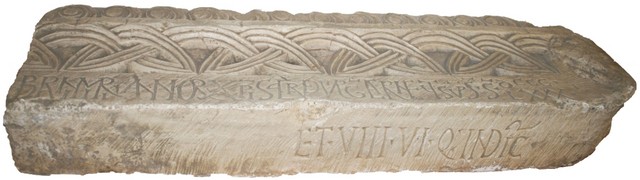
    Two monuments from 9th century bearing the name of Croatian prince Branimir.

    The first international recognition of Croatia came in 879
    from Pope John VIII, i.e., 1145 years ago!

    The Croatian Prince Branimir, 9th century, made important steps in strengthening the relations with Rome. During the solemn divine service in St. Peter’s church in Rome in 879, Pope John VIII gave his blessing to the prince and the whole Croatian people, about which he informed Branimir in his letters, the first one dated on May 21, 879. This was the first time that the Croatian state was officially recognized (at that time the international legitimacy was given by the Pope), which, as we see, happened more than eleven centuries ago!

    In his letter dated from 881 the Pope addressed Branimir as the “glorious prince”.

    A letter by Pope John VIII sent to Croatian Prince Branimir on May 21 879
    with his blessing to the prince and the whole Croatian people.

    Dragom sinu Branimiru,

    itajui pismo tvoga gospodstva, to si ga nama po asnom sveeniku Ivanu, uzdaniku naem, poslao, razabrah jasnije od sunca koliku vjeru i iskreno tovanje gaji prema crkvi svetih apostola Petra i Pavla i prema nama.

    Pa jer s voljom Bojom ponizno ispovijeda i eli kao dragi sin biti u svemu vjeran i pokoran svetom Petru i nama, koji smo po milosti Bojoj namjesto njega, uvelike zahvaljujemo gospodstvu tvojemu ovim naim pismom apostolskim pa te s oinskom ljubavlju kao najmilijeg sina primamo i u duhu grlimo, gdje se vraa u krilo Svete Stolice apostolske, majke tvoje, u kojoj su se i prei tvoji iz najbistrijega vrela pojili slatkim napitkom svetoga nauka; i bit emo ti skloni apostolskom dobrotom, da bi vazda lebdjela nad tobom milost i blagoslov od apostolskih glava sv. Petra i Pavla, te da bi uvijek bio itav i siguran od vidljivih i nevidljivih neprijatelja, koji neprestano ljudskom spasu zasjedaju i staju na put, i da bi lake stekao uenu pobjedu nad neprijateljima, jer, kako bude nastojao, da se sam Bogu ponizno pokori i slua sveti nauk njegov i kako bude iskazao za ljubav Boju dunu poast sveenicima i slubenicima njegovim, tako e bez sumnje biti pobjednik i gospodar nad svima svojim neprijateljima i buntovnim protivnicima.

    I zato opominjemo revnost tvoju, da u svim svojim djelima ima uvijek pred oima Gospodina, da ga se boji i svim srcem ljubi, jer psalamist veli: “Blaen ovjek, koji se Boga boji i komu su veoma omiljele zapovijedi njegove; jako e biti sjeme na njegovo na zemlji”; a sam veli u evanelju: “Tko mene ljubi, drat e rije moju, i moj e otac ljubiti njega, i k njemu emo doi i kod njega emo se nastaniti”. Kad je to tako, ako svojim dobrim djelima, to sada sjaju, proslavi Boga, bez sumnje e te jednom ovjenati vjena slava, jer on preko Mojsija sam svjedoi, da tako ini, govorei: “Proslavit u one koji mene slave”. Pa kako si preko spomenutog ve sveenika Ivana od nae vrhovne vlasti molio, da te za bolji spas tvoj blagoslovimo naom apostolskom rijeju, to smo vrlo rado uinili. Kad smo naime na dan Uzaaa Gospodnjega sluili misu na rtveniku Sv. Petra, digosmo ruke u vis i blagoslovismo tebe i cio narod tvoj i cijelu zemlju tvoju, da moe ovdje uvijek spaen tijelom i duom sretno i sigurno vladati zemaljskom kneevinom, a poslije smrti da se na nebesima veseli s Bogom i da vjeno vlada. A budui da smo spoznali da je ovaj isti sveenik Ivan u svemu tebi i nama uistinu vjeran, podali smo mu nae apostolsko pismo, da ga preda bugarskom kralju. Stoga te molimo, daj za ljubav svetomu Petru i nama, da s tvojim doputenjem obavi to poslanstvo bez otezanja, pa zato tebi za ljubav mnogo puta zahvaljujemo.

    Izvor krk.fcpages.com

    Papa Ivan Pavao II. govori Hrvatima
    Budite narod nade! Budite narod koji moli!

    Proslava jubileja neprekinute veze Hrvata sa Svetom Stolicom i Petrovim nasljednicima od dana kad se na blagdan Kristova Uzaaa 21.svibnja 879. godine slavila sveta misa i tom prigodom je papa Ivan VIII. blagoslovio kneza Branimira i sav hrvatski narod. Tu jedanaest stoljea dugu vjernost Ivan Pavao II., sada blaeni, uzveliao je i potvrdio kad je 30. travnja 1979. godine na 1100. obljetnicu toga dana po prvi puta u povijesti kranstva jedan papa sluio svetu misu na hrvatskom jeziku, i to u sreditu Crkve, nad grobom apostola Petra. Stog istog mjesta kao i njegov Predasnik Ivan VIII., Ivan Pavao II. je izmeu ostalog u svojem govoru brojnim hrvatskim hodoasnicima predvoenim blagopokojnim nadbiskupom Franjom Kuhariem rekao:

    “Rairenih ruku vas grlimo i oinskom ljubavlju primamo” ovdje na grobu svetog Petra, prigodom znaajne obljetnice vjernosti Hrvata Svetoj Stolici, a to je ujedno spomen i oinske naklonosti Petrovih nasljednika prema vama… Ovo je spomen vaih pradjedova, vaih kranskih knezova i kraljeva, vaih biskupa i sveenika, vaeg starohrvatskog liturgijskog jezika, vaih divnih crkava i na poseban nain vaih svetita u ast Majke Boje… Ondanji dogaaji obradovali su srce Petrova nasljednika , a bili su presudni za svu buduu povijest hrvatskog naroda i Crkve, za vau vjeru, kulturu i politiku samostojnost. Gledajui u duhu bogatu i viestoljetnu prolost vaeg naroda ini nam se da moemo naglasiti osobito ove tri njezine izvanredne vrednote:

    • Prvo, vjernost Isusu Kristu i Evanjelju, koju su vai pradjedovi znali iskupiti pravim muenikim arom i duhom u vjekovnoj borbi za “krst asni i slobodu zlatnu”
    • Drugo, ljubav i odanost Hrvata prema Rimskoj crkvi, prema Petrovoj Stolici. Ova Crkva uistinu je” Majka vaa ” u kojoj su se preci vai iz najbistrijeg vrela pojili slatkim napitkom nauka.
    • Tree, ljubav, odanost i pobonost Hrvata prema Mariji, Majci Bojoj, Majci Crkve, a koju vi tako rado nazivate ” kraljicom Hrvata” i sinovski tujete u brojnim svetitima.
    Ovu trostruku vjekovnu vjernost pretvarate i danas u svoj ” Veliki zavjet” vjernosti Isusu Kristu, Crkvi i Majci Bojoj, posebno nakon jubilarnih proslava u Mariji Bistrici, Solinu i Biskupiji. Budite vjerni, budite postojani , budite ponosni na svoje kransko ime!

    I dok danas podiemo ruku da blagoslovimo vas prisutne i cio va narod i cijelu zemlju vau, molimo Gospodina da uva vau vjeru, molimo Boju majku da uvijek i svagdje bude vaa ” najodlinija Zagovornica”.. .pa vas stoga molimo da nikada ne zaboravite svoje vjere, da ljubite svoje obiteljsko ognjite, svoju Crkvu i svoju domovinu!

    Dragi moji Hrvati! Hvala vam na ovom susretu, na ovom iskazu obnovljene vjernosti. Kao neko papa Ivan VIII., tako se i ja danas radujem vaoj vjeri, vaoj ljubavi, vaoj vjernosti Isusu Kristu i Njegovoj Crkvi.

    Papa vas voli, Papa vas grli i prima, Papa vas blagoslivlja! Amen!

    Petnaest dana nakon velianstvenog slavlja Branimirova jubileja papa Ivan Pavao II. odazivajui se molbi hrvatskih biskupa poslao pismo zagrebakom nadbiskupu Franji Kuhariu i cijeloj Crkvi u Hrvata. To je pismo itano po svim crkvama u nedjelju 10. lipnja na blagdan Presvetog Trojstva, kao misa zahvalnica za dar vjere i neprekinutu tisuljetnu povezanost hrvatskih katolika s Petrovom Stolicom u zajednitvu Katolike crkve. Izmeu ostalog Ivan Pavao II. je proroki napisao:

    …ova e vam godina 1979. biti velika. Ne samo zbog dogaaja kojeg se spominjete nego zbog njegovih posljedica.( Zar nije posljedica slobodna Republika Hrvatska?) Nema sumnje, smjelo djelo kojim je knez Branimir u doba raskola izmeu Istone i Zapadne Crkve od Bizantskog carstva svom duom i srcem preao na stranu Rima i Zapada,uinilo je stvarnost Hrvatske katolikom. Tada obnovljena povezanost s Apostolskom Stolicom postade nepokolebljivi temelj na kojem je sazdana vjernost hrvatske katolike Crkve rimskoj. Vjernost to udesnija i pohvalnija to je izvrgnuta stoljetnim navalama, tee imala pretrpjeti nevolje…

    Vi danas obnavljate istu privrenost, vjerni batini svojih otaca koji vam predadoe zapaljenu zublju vjernosti. Po tom daru Bojem, to ste ga dugotrajnom strpljivou sauvali, Hrvatska je Crkva postala Kristu najdraa, jer one koje ljubi obiljeava ranama svoje muke.(Domovinski rat) Crkva kao i svaki pojedini kranin koji zajedno s Kristom trpi, kroz najrazliitije protivnosti Kristu se na najbolji nain suobliuje….jer pravi Kristov sljedbenik ne smije da se slavodobitima uspava, nego svakim mu se danom boriti, svakom mu je danom vjernost uvati, svakim danom za Krista svjedoiti.

    …Svojom ustrajnou nainili ste svojevrstan savez s Kristom i Crkvom: ostati vam je u tom savezu, koliko god vremena bila tomu protivna. Onakvi kakvi bijaste od slavne 879.., takvi uvijek ostajte: biskupi, prezbiteri, sav katoliki narod najtjenije meu sobom povezani i privreni- ostanite kao jedna cjelina, jedne due, jedne volje vjerni u savezu s Kristom…

    ..Dok vas potiemo, ne zaboravljamo da vas uvrstimo u nadi. Stoga dodajemo: Budite uvjereni,ako Kristu budete kao i do sada velikoduno odani, on e vam dati te nikada ne izgubite ovog svog identiteta.

    Imamo u vas povjerenja. Puni smo povjerenja da ete i ubudue izraavati ovo zajednitvo s Kristom i sa Crkvom. I to ne samo uvajui batinu istine nego i ivotom: propovijedat ete Krista i ujedno naglaavati da se ljudsko drutvo samo na temelju njegova nauka moe vrsto mirno i sretno izgraivati i da samo ondje istinski buja i samo vremenito blagostanje, gdje su istinski krani, jer se oni pokazuju dostojni povjerenja, te su kadri povezivati ljudsku uzajamnost i oblikovati najbolje drutvo…..i kao na vaim dosadanjim putovima nasljedovanja Krista, sigurni smo da e vam u tom pomoi Presveta Majka Otkupiteljeva, Majka sve Crkve, Djevica Marija.

    Napokon, odgovarajui obnovljenoj vaoj privrenosti, ponavljamo i Mi onaj Apostolski Blagoslov kojim je Na Predasnik Ivan VIII. primio kneza Branimira i njegov narod u krilo Rimske crkve. Ujedno vas grlimo istim zagrljajem ljubavi kojom su kroz stoljea bili povezani Rimska crkva i hrvatski narod te molimo da budu sve obilniji plodovi ove uzajamne vjernosti”. (priznanje Republike Hrvatske od Svete Stolice 13. sijenja 1992.)

    Dano u Rimu, kod svetog Petra, 15. svibnja 1979., prve godine nae papinske slube.

    Papa Ivan Pavao II.


    Misli Pape Benedikt XVI. upuene Hrvatima

    Kad je zagrebaki nadbiskup kardinal Josip Bozani pristupio novoizabranom Papi iskazati potovanje i odanost Sveti je Otac prvi progovorio i rekao: “Uzoriti, srdano pozdravljam hrvatski narod i dragu Hrvatsku, koja je uvijek vjerna”.

    Pri pohodu hrvatskih pastira ad limina apostolorum god 2006. Papa je hrvatskim biskupima rekao: “S pravom ste ponosni na etrnaeststoljetnu kransku batinu i vjeru svojeg naroda, ali ste istodobno vrlo svjesni da je opredjeljenje za Boga ne samo plod prolosti nego i osobni in koji pred Bogom obvezuje svakog pojedinca, kojemu god narataju pripadao”.

    Na 38. obljetnicu smrti blaenog Alojzija Stepinca, odmah nakon proglaenja blaenim kao Predstojnik Kongregacije za nauk vjere odrao je propovijed o mueniku Stepincu u kojoj je u neimenovanom Hrvatu iz Danteove Boanstvene komedije koji promatra Kristovo lice na Veronikinu rupcu prepoznao kardinala Stepinca. Nazvao ga je i “Bojim odvjetnikom” koji se u ime savjesti suprotstavio vladajuoj gomili”.

    Hrvatskim biskupima je Papa rekao: “Sveta Stolica i ubudue e stajati uz vas te s pozornou pratiti i podupirati nastojanja vaeg naroda na putu istinskog napretka…
    Potrebno je promisliti, ipak, da ni putovi s dobrim i poeljnim ciljevima (EU?) nisu bez zamki suvremenih kulturnih strujanja, kao to su sekularizacija i relativizam. Stoga je nuno neumorno navijetanje evaneoskih vrednota, da vjernici mogu izbjei te opasnosti”.

    Sve iznijeto, upuuje nas da je potrebno samo jedno:

    biti “Zajedno u Kristu”

    Iz knjige: Papa Ivan Pavao II govori Hrvatima, B. Nagy, SJ
    B. Stani: Pet desetljea ljubavi i potivanja (Glas koncila)

    21. svibnja 2012. godine, navrava se 1133 godine od blagoslova pape Ivana VIII. koji je uputio knezu Branimiru i hrvatskom narodu daleke 879. godine

    21. svibnja 879., tono prije 113 godine na svetkovinu Uzaaa Gospodnjega papa Ivan VIII. blagoslovio je kneza Branimira i hrvatski narod. Lipnja 879. Uputio je dva pisma, knezu Branimiru i hrvatskom narodu i sveenstvu.

    U pismu knezu Branimiru pie:

    “…i budui da si nas preko sveenika Ivana zamolio, da bi te za vei Tvoj spas blagoslovili svojim blagoslovom, uinili smo to rado…”

    Kad smo naime na dan Uzaaa Gospodnjega sluili misu pred rtvenikom svetog Petra, digosmo ruke u vis, te blagoslovismo Tebe i narod Tvoj, i zemlju Tvoju, da uzmogne ovdje sreno vladati,…”

    Istog dana i godine napisao je papa Ivan VIII. Sveenstvu i hrvatskom narodu:

    “Svim astnim sveenicima i itavom hrvatskom narodu. Proitavi poslanicu vaeg kneza Branimira, koju nam posla po astnom sveeniku Ivanu, vidjesmo ne samo njegovu, ve i vau vjeru i iskrenu ljubav prema sv. Petru i nama…” (prema Klaievoj Povijesti Hrvata, Zagreb 1899., svezak prvi).

    Ovo pismo pape Ivana VIII. odgovor je na pismo to ga je prethodno primio od kneza Branimira, a njime se priznaje knez Branimir kao zakoniti vladar, a Hrvatska kao zakonita drava.

  • Lady Jadranka Beresford-Peirse a Member of the Order of the British Empire (MBE) since 2024

    Lady Jadranka Beresford-Peirse a Member of the Order of the British Empire (MBE) since 2024

    Author: Brian Gallagher

    Lady Jadranka Njer Beresford-Peirse, born in Croatia, lives in London.
    Photo taken in the Bukovac House in Cavtat (close to the city of Dubrovnik), by Robert Mati, Split.
    The photo represents “Djevojka sa utom tkaninom” (A girl in yellow cloth) by Vlaho Bukovac, distinguished Croatian painter.
    Information by the courtesy of Lady Jadranka Njer Beresford-Peirse.
    Lady Jadranka Beresford-Peirse has been made a Member of the Order of the British Empire (MBE) as part of the King’s birthday honours list. This is an important moment for UK-Croatia relations, as Lady Jadranka has worked tirelessly for Croatia, and demonstrates how far we have come since the early 90s.

    An MBE is given for:

    ‘Achievement or service in and to the community which is outstanding in its field and has delivered sustained and real impact which stands out as an example to others.’

    From the government website:

    ‘Jadranka, Lady BERESFORD-PEIRSE, Founder and Trustee, The International Trust for Croatian Monuments. For services to UK/Croatia relations, to Philanthropy and to the Protection of Cultural Heritage in Croatia.’


     Congratulations to Lady Jadranka!

     Written by Brian Gallagher

  • Nathalie Rayes ambassador of the USA to Croatia visited FER, University of Zagreb, in June 2024

    Nathalie Rayes ambassador of the USA to Croatia visited FER, University of Zagreb, in June 2024

    Author: Nenad N. Bach and Darko ubrini

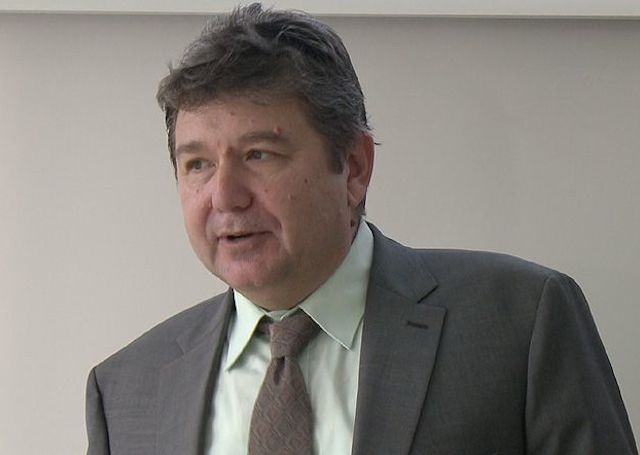
    Her Excellency Mrs Nathalie Reyes, ambassador of the USA to Croatia, with Professor Vedran Bilas,
    the dean of the Faculty of Electrical Engineering and Computing (FER), University of Zagreb

    Nathalie Rayes was sworn in as U.S. Ambassador to the Republic of Croatia on January 10, 2024. She has a Bachelor of Arts in Sociology and a Master’s in Public Policy from UCLA (University of California), and is fluent in Spanish and conversational in Arabic.

    H. E. Nathalie Reyes, wearing the jersey of the University of Zagreb, FER,
    with Professor Vedran Bilas, the dean of FER
    .

    Nathalie Reyes:

    Today, I visited the Faculty of Electrical Engineering and Computing at the University of Zagreb, one of Croatia’s top institutions. Meeting with talented and innovative students was truly inspiring. The future of engineering and computing in Croatia is bright!

    Source USAmbCroatia

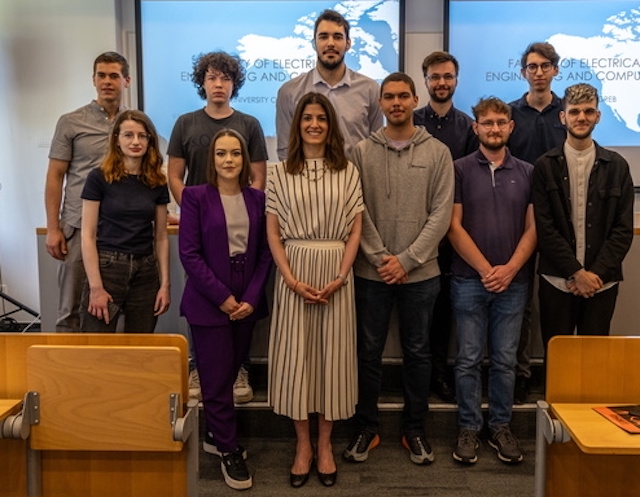
    H. E. Nathalie Reyes with a group of Croatian studetns at FER, University of Zagreb, Croatia. More photos.

  • Zlatko Josip Grgi Croatian guitarist playing Chaconne by J. S. Bach on the famous Torres guitar La Invencible

    Zlatko Josip Grgi Croatian guitarist playing Chaconne by J. S. Bach on the famous Torres guitar La Invencible

    Author: Nenad N. Bach and Darko ubrini

    Zlatko Josip Grgi, distinguished Croatian guitarist, nicknamed “Torres’ Whisperer”

    Zlatko Josip Grgi was born in Zagreb in 2001. From his earliest childhood, he has been surrounded by some of the best guitar players in the world. In the spring of 2018, he recorded Ennio Morricone’s Cinema Paradiso as a music video in Venice. In December 2018, he gave a successful concert in Barcelona on the famous Torres guitar, La Invencible (The Invincible), as Torres himself had named it, which is the only guitar among the National Treasures of Spain. On that occasion, the Spanish gave Zlatko Josip Grgi the nickname Torres’ Whisperer.

    More information at torreswhisperer.com


    Zlatko Josip Grgi – Torres Whisperer performing Bach-Mendelsshon Chaconne
    from Partita No 2 in d minor BWV 1004 Guitar Antonio de Torres 1890

    Zlatko Josip Grgi – Torres Whisperer performing Sevilla from Suite Espanola,
    Op. 47, No. 3 by Isaac Albeniz Guitar Antonio de Torres 189

    Torres’ Whisperer – Zlatko Josip Grgi – Serenata Espanola (J. Malats)

  • Andrej Dujella: Diophantine m-tuples and Elliptic Curves, published by Springer, Cham, 2024.

    Andrej Dujella: Diophantine m-tuples and Elliptic Curves, published by Springer, Cham, 2024.

    Author: Nenad N. Bach and Darko ubrini

    cover of the book Diophantine m-tuples and Elliptic Curves
    Front matter of the monograph (highly recommended!): [PDF]
    Back matter (References and Index): [PDF]
    Professor Andrej Dujella, distinguished Croatian mathematician,
    is a Fellow of Croatian Academy of Sciences and Arts

    The book presents fragments of the history of Diophantine m-tuples, emphasising the connections between Diophantine m-tuples and elliptic curves. It is shown how elliptic curves are used in solving some longstanding problems on Diophantine m-tuples, such as the existence of infinite families of rational Diophantine sextuples.

    On the other hand, rational Diophantine m-tuples are used to construct elliptic curves with interesting Mordell-Weil groups, including curves of record rank with agiven torsion group. The book contains concrete algorithms and advice on how to use the software package PARI/GP for solving computational problems.

    This book is primarily intended for researchers and graduate students in Diophantine equations and elliptic curves. However, it can be of interest to other mathematicians interested in number theory and arithmetic geometry. The prerequisites are on the level of a standard first course in elementary number theory. Background in elliptic curves, Diophantine equations and Diophantine approximations is provided.

    More information

    Professor Andrej Dujella is since 2017 a recipient of the honorary doctorate (Doctor Honoris Causa)
    from the University of Debrecen, Hungary, due to his very fruitful collaboration with Hungarian
    mathematicians. Hungary has a long-standing tradition in Number Theory.
    Professor Andrej Dujella is working at the University of Zagreb. He is a member of the Croatian Academy of Sciences. He started to work on diophantine sets as a PhD student. These sets are named after the Greek mathematician Diophantus of Alexandria. Multiplying any two of their elements and adding one gives a square.

    The most important result of professor Dujella is that there are only finitely many diophantine quintuples and they are effectively enumerable. Its ingenious proof combines elementary number-theoretic considerations with A. Baker’s method, which is one of the most modern tools of diophantine number theory. Professor Dujella generalized the notion of diophantine sets in several directions.

    After his efforts this has become very fashionable; many Hungarian, American, Austrian, French and Japanese researchers are working on the topic. He is not only a leading expert of number theory, but has important results on weak parameters of the RSA cryptosystem, which is fundamental for the security of the internet.

    Professor Dujella has led a mutually fruitful collaboration with the Faculty of Informatics and with the number theory group of the University of Debrecen (in Hungary) for more than 20 years.

    He has published joint papers with seven mathematicians from Debrecen. He led several joint Hungarian-Croatian research projects and was the co-organizer of the Hungarian-Croatian Workshop on Mathematics and Informatics.

    Source – University of Debrecen, Hungary

  • Croatian mariners in the ARCTIC EXPEDITION in 1872-1874

    Croatian mariners in the ARCTIC EXPEDITION in 1872-1874

    Author: Prof.Dr. Darko Zubrinic

    Many Arctic expeditions in the 19th century ended with shipwrecks. Probably the best known is Franklin’s expedition (1845) which had tragic human losses: as many as 120 people died. Twenty expeditions were organized in order to find and save them, but in vain.

    The Austrian-Hungarian state, which at that time included also Croatian coast, planned expedition to NE of Novaya Zemlya, and to find the so called North East Passage. This led to the discovery of Franz Josef Land in 1873, a collection of about 85 islands in the Arctic Ocean, now a Russian National Park called Zemlya Franca Iosifa.

    The ship named Tegetthoff was built up in the German port Bremen using a special new technology, in order to endure extremely low temperatures and dangerous ice pressure (32 m long, 7 m wide, 220 tons). The crew was composed of 24 persons, members of Austrian-Hungarian marine in the Adriatic sea. It is interesting that the Croats were predominant in the crew. It was composed 9 Austrians, 1 Hungarian, 1 Moravian Czech, 1 Italian (?), and as many as 12 Croats from various parts of Croatian coast (Rijeka, Cres, Bakar, Volosko, Lovran, Plomin, Mali Losinj, Brac, Hvar). The names of these Croatian mariners are:

    • Petar Lusina (from the island of Cres),
    • Lovro Marolla (from Rijeka),
    • Ante Vecerina (from Draga near Rijeka),
    • Petar Falesic (from Bakar),
    • Juraj Stiglic (from Bakar),
    • Jakov Sucic (from Volosko),
    • Fran Lettis (from Volosko),
    • Vicko Palmic (from Lovran),
    • Josip Latkovic (from Plomin),
    • Ante Katarinic (from Mali Losinj),
    • Ante Lukinovic (from Pucisca on the island of Brac),
    • Ante Zaninovic (from Sv. Nedilja on the island of Hvar).

    In his diary Julius Payer includes Ante Scarpa from Trieste into Slavonic (Croatian) group, see [Kunicic], p. 40, and according to Kunicic the Croatian crew had 13 members (see p. 2), not 12. Also every Sunday the Croats read parts of Evangel in Croatian (scavet), which belongs to glagolitic tradition, see [Kunicic] p. 38. On Christmas they sang a well known song “U se vrime godista”, and remember their customs. The crew had a small library with about 400 books, half of them scientific. And a part of books was in Croatian.

    For the complete list of names and other details related to this expedition, see here. There were some objections addressed to Karl Weyprecht, captain of the ship, why he chose so many Croats, instead of Tyrol Austrians. He answered that he counts on endurance, discipline and experience of Croatian mariners, and the fact that they do not drink.

    Very important for success of this carefully planned and dangerous expedition was the presence of eight dogs. The expedition led to the discovery of Franz Josef’s Land in the Arctic.
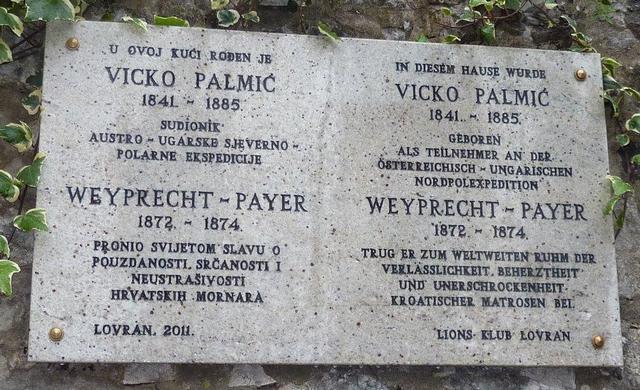

    Memorail tablet in honour of Vicko Palmi and Weyprecht-Payer in the town of Lovran, Istrian peninsula, Croatia.
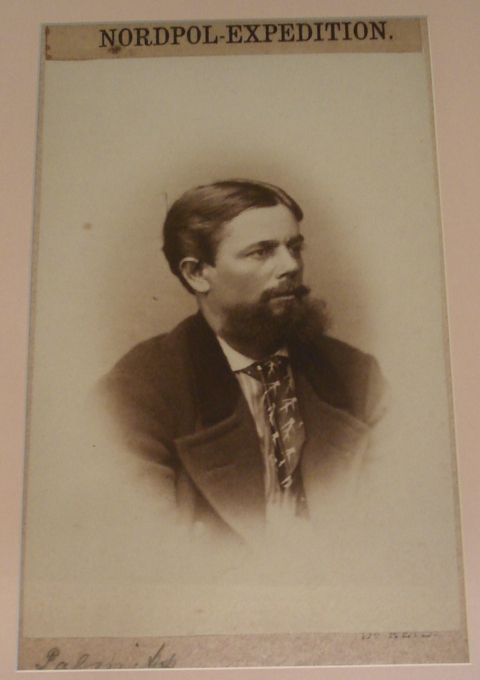
    Vicko Palmic, Lovran, photo from an exhibition in Lovran 2012.

    In 1872, when the expedition sailed off from the port of Bremen, weather condition and temperature were particularly severe. A result of ice movement was that the sailboat became wedged in the mass of ice for two years! At that time it was not possible to communicate with the rest of the world as it is today. During these two years the crew, although in extremely difficult situation, performed numerous scientific investigations. The preserved log-book testimonies about very serious and well organized everyday life and work. As the ice moved slowly northward, the mountains emerged, that they named Franz Josef’s Land. It had been decided to leave the location of the ship, and carry three auxiliary saving ships on sledges, tugged with dogs and people. In dramatic 800 kilometers that they covered mostly on foot under very difficult conditions, they discovered numerous new interesting places. So today we have places like the Cape of Fiume (= the town of Rijeka, on Croatian littoral), and the Cape of Klagenfurt (a town in Austria).
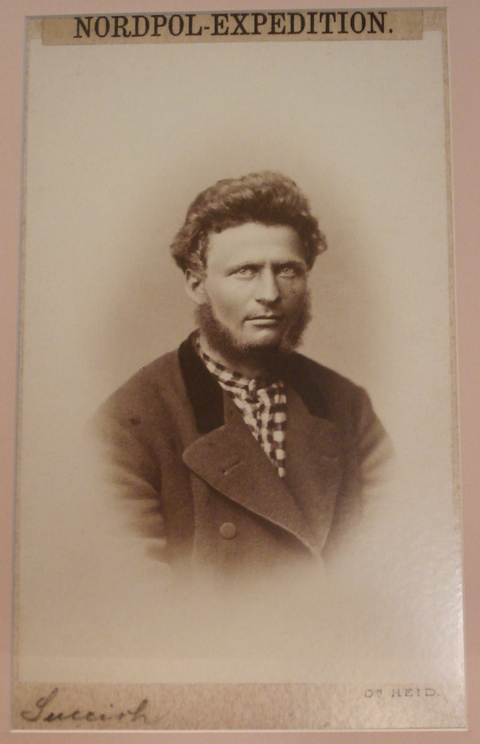

    Jakob (Jacobus) Sucic, Volosko
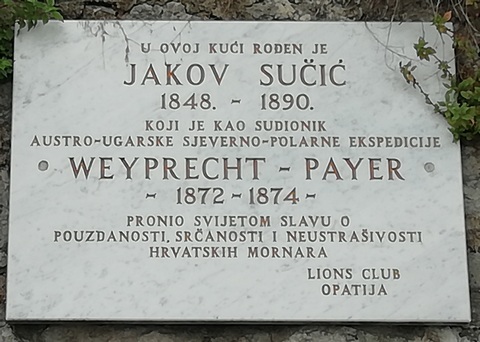
    Many thanks to dr. Sanja Rukavina of the University of Rijeka, for sending
    us this photo from Volosko, where Jakov Sui was born.

    One of participants of this adventure was Eling Carlson from Norway, connoisseur of northern seas. Unfortunately, one member died due to sickness: Oton Kriz from Moravia (today in Czechia). After about two years of stay in the Arctic the ship Thegetthoff was left by the whole crew in the ocean of ice, and 23 people set off back to Europe in three small saving ships. For almost three months people and dogs had to tug boats on sledges, and then during next nine days they had to row until they finally met two russian fishing boats near Novaya Zemlya.
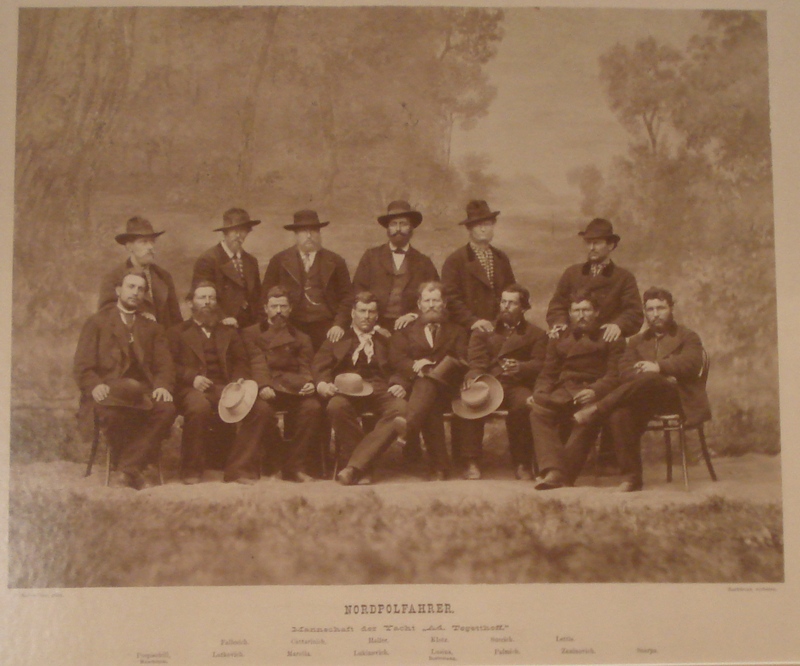

    A part of the the North Pole Team

    As stated in [Kunicic], p. 122, there is no king in the world that would be accepted with such hospitality and joy as those totally exhausted people were accepted by Russian mariners. It is very probable that Croatian mariners were able to communicate with Russians, since Croatian and Russian languages are relatively close. Among all members of the expedition only Petar Lusina (from the island of Cres) knew Russian. Besides his native Croatian, he also spoke English, French and Italian. Members of the expedition learned many news that have happened in Europe during two and a half years of their expedition. The two boats took them to Vardoe in Norway, for which Russian mariners have sacrificed four days of their fishing, plus four days for the return.
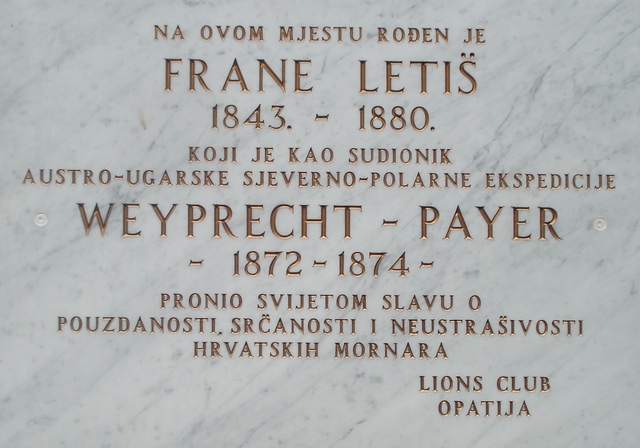

    Memorial plaque in Opatija in honour of Frane Leti, member of the team, was born in this town.

    Upon successful arrival to Europe, with help of Russian and Norwegian navy, members of expedition reached Hamburg. In Vienna a glorious welcome was organised, and all of them obtained honorary citizenship in Austrian-Hungarian state. A grand “banchetto” was organized in the Croatian town of Volosko near Rijeka. The overall expenses were such that the expedition ended with +17.61 forints, which we know from a very detailed and pedantic final account.

    It is interesting that experiences of this expedition were important in the preparation of Amundsen’s expedition to Arctic about 30 years later.

    Croatian descent of half of the crew was not even mentioned in the existing literature available in German, English, and Italian. In Croatia itself, the expedition was described by Eugen Kumicic.

    It also worth mentioning that in 1882, as a part of the First International Geophysical Year, another very ambitious and successful expedition had been organized to the region of Greenland (in the part which is north of Island). Also in this case, in the crew composed of 12 half of them were Croats. Their names are

    Ivan Samanic, Josip Baretincic, Anton Mikacic, Anton Lukinovic, Jakov Succic, Tomas Diminich. For the remaining names of the crew and other details see here.

    Miljenko Smokvina: Nevjerojatna polarna ekspedicija 1872. – istraivaki brod Tegetthoff

    Ostale aktivnosti g. Miljenka Smokvine iz Rijeke

    References:

    • Das Tagebuch des Maschinisten Otto Krisch Oesterreichisch-Ungarische Nordpolexpedition von 1872 bis 1874 Hrsg.: Egon Reichhardt (Leykam Verlag 1973) [Payer & Weyprecht]
    • Die Oesterreich-Ungarische Nordpol Expedition In den Jahren 1869-1874 Julius Payer (A.Hoelder,Wien 1876 )
    • FRANZ-JOSEFS-LAND -.-: OESTERREICHISCHE NATIONALBIBLIOTHEK: 100 Jahre Franz-Josefs-Land. Zur Erinnerung an die Entdeckungsreise der Oesterreichisch-Ungarischen Nordpol-Expedition 1872-1874 unter Julius von Payer und Carl Weyprecht. Katalog der Ausstellung 1973. Mit 24 Taf. Wien, o.V., 1973. Okart., g.e. XII, 128 pp.
    • Austro-Hungarian North Pole Expedition 1872-74 (Franz Josef’s Land)
    • Petar Kunicic, Hrvati na Ledenom moru, putovanje po sjeveru s hrvatskim mornarima, po izvjescu Julija Payera (pretisak iz 1893.g.), Dom & Svijet, Zagreb, 1994. (Petar Kunicic was a teacher on the island of Vis)
    • Adam Eterovich Bracanin: CROATIANS AND THE POLAR EXPEDITION OF 1872

    It was Mr Miljenko Smokvina from Rijeka who noticed from the names of members of the crew that many of them are Croatian. After painstaking study that he undertook in 1990s, he discovered many new interesting details about these brave Croatian mariners.

    I express my deepest gratitude to Mr Miljenko Smokvina for his kind help during the preparation of this web page, and also to Matica hrvatska for having organized very interesting lectures about history and culture of the city of Rijeka, presented by members of Matica hrvatska Rijeka in April 2000 in Zagreb.

    Nikola Primorac Croatian captain of City of Ragusa craft sailing from Liverpool to New York and back in 1870

    Pomorski i povijesni muzej Hrvatskog primorja u gradu Rijeci niti ne spominje Arktiku ekspediciju. Kako je to mogue?

    Tomo Vikovi, grob na otoku Jan Mayen na Arktiku

  • Oto Reisinger 1927-2016 distinguished Croatian caricaturist

    Oto Reisinger 1927-2016 distinguished Croatian caricaturist

    Author: Nenad N. Bach and Darko ubrini

    Oto Reisinger

    Although an architect by profession, Oto’s main vocation in life was drawing. During his rich career, which lasted over half a century, in addition to primarily single panel cartoons, he also created comic books, portrait caricatures, book illustrations, scenography and animated movies. A humorist as quick on the tongue as he is with the pen.

    The people of Zagreb remember him as a well-known and charismatic face of the city, who came up with his ideas every day, absorbing the city’s atmosphere by transferring them to paper, he gained world fame. His departure created a void that is impossible to fill, but the goal of the House of Cartoons is to make Oto’s spirit live forever.

    Except in Croatia, he published his caricatures abroad (in Germany, Switzerland, the Netherlands, and Great Britain): in Quick, Nebelsparter, Panorama, Punch.

    Source: otoreisinger.com

    Mister director, they’re saying that the stock market has the tendancy of becoming stable by 2030!
    He says he’ll add another million if we keep her!
    Until the last crumb, please! Nobody should say that we are harming the environment!
    Some of the books containing Resinger’s caricatures.
    It seems that this morning the world very much sympathises with us…
    (apropos of Serbian 1991 aggression on Croatia)
    A European diplomat is just expressing his concern about a hotel
    in which he used to spend many pleasant vacations with his wife.
    (apropos of Serbian and Montenegrin shelling and bombing of the city of Dubrovnik, protected by UNESCO)
    Standards of EU
    What the hell do we look – like tourists?!

  • Hrvojka Mihanovic-Salopek: U ogledalu znanstvenih prosudbi II. sv.

    Hrvojka Mihanovic-Salopek: U ogledalu znanstvenih prosudbi II. sv.

    Author: Nenad N. Bach and Darko ubrini

    Dr. Hrvojka Mihanovi Salopek. Izvor fotografije HAZU.
    Hrvojka Mihanovic-Salopek: U ogledalu znanstvenih prosdbi II. sv.

    Ova je knjiga nastavak prvog sveska istoimenog djela autorice, objavljene 2017. u Zagrebu. Prvi svezak bavio se kritikom analizom knjievnih povjesniara i kritiara (Antun Barac, Miljenko Foreti, Nikola Batui), potom daje knjievnopovijesni pogled na autore duhovnih tema (Velimir Deeli, Ivan Kukuljevi-Sakcinski, pastoralno marijanski motivi kod Marije Bettera Dimitrovi). Bavi se prouavanjem pjesnitva Miroslava S. Maera, Zlatka Tomiia, Drage Ivanievia, te osvjetljava osobnost Dore Pejaevi, prve hrvatske skladateljice visokog meunarodnog ugleda.

    Drugi svezak ove vrlo zanimljive i vrijedne monografije, objavljene 2024. kod istog izdavaa (Biakova), ima sljedei sadraj:

    I. poglavlje, Knjievnici pod drugaijim reflektorom, 5

    • Nepoznati maritimni putopisi i novele Frana Vinka Maroevia, 7-41
    • Putopisna zbirka Nikole Andria u procjepu izmeu realiteta i vizionarskih htijenja, 43-82
    • Presjek kroz djelo i nepoznata posthumna ostavtina Miroslava S. Maera, 83-119
    • Demistifikacije uloge pouzdanog putpisca u putopisima Marijana Matkovia, 121-156
    • Komia u pjesnikoj vizuri Jake Fiamenga, 157-196
    • Odraz Istre u pjesnikom stvaralatvu Borisa Domagoja Biletia, 197-248
    • Astronomske i kataklizmike opservacije u pjesnitvu Gorana Gatalice, 249-289

    II. poglavlje, Interferencijska pretapanja hrvatskog mediteranskog pjesnitva i slikarstva, 291

    • Odraz hrvatske povijesne i knjievnoumjetnike batine u stvaralatvu Josipa Botterija Dinija, 293-323
    • Zvonimir Mihanovi – Snoviti odraz povratka na Itaku, 325-348

    III. poglavlje, Umjetniki profili dvojice povjesniara knjievnost, 349

    • Slavko Jei kao prozni autor i njegova knjievna percepcija, 351-379
    • Frangeova interpretacija i revalorizacija Kranjevieve poezije u Stoljeima hrvatske knjievnosti, 381-414

    Kazalo imena, 415-436
    Biografija autorice, 437-449
    Sadraj knjige, 450-451


    Radi ilustracije, zadrat emo se samo na dva imena obraenih u monografiji dr. Hrvojke Mihanovi Salopek.

    Nikola Andri (1867.-1942.)

    U svesku II. svojih putopisa (str. 25-26), Nikola Andri opisuje kako se Ivan Metrovi “razvio u strastvenog Hrvata, pa nipoto nije htio pristati na predlog londonskog srpskog poslanika, koji je silom elio da Metrovieva izloba u Londonu izae pod srpskim imenom – Ili pod hrvatskim, ili pod jugoslavenskim, ali pod srpskim nikako – bio je Metroviev odgovor. I otovorena je pod “jugoslavenskim” Drugu izlobu sprema pod jedinim hrvatskim imenom.” Vidi str. 59 monografije autorice.

    U svojem putopisu Dva dana u Bugarskoj (pisanom oko 1910.) Nikola Andri primjeuje da su se u to doba u Bugarskoj uestalo korislili hrvatski udbenici (u bugarskom prijevodu). Spominje sestre milosrdnice iz Hrvatske koje su otvorile prvu medicinsku kolu u Bugarskoj, a imale su samostan u Drinopolju. Takoer, Andri u Sofiji saznaje i za hrvatske tamburako drutvo iz kojega je poteklo jedno bugarsko. Vidi str. 60.

    Zvonimir Mihanovi

    Roen je 1946. u Poljicima kod Splita, a nakon zavretka Pedagoke akademije u Splitu studiaro je slikarstv u Milanu i Parizu. Slikarev uspon munjevito zapoinje nakon to mu je jedna slika bila izloena u Salon d’Automne Grand Palais u Parizu, gdje je postigla sjajnu recepciju i priznanja. Nakon toga surauje s vodeim galerijama u SAD-u. Njegov likovni stil kritiari oznaavaju kao poetski hiper-realizam, te je jedan od najistaknutijih predstavnika tog smjera u svijetu.

    Meu inim, osllikao je Hrvatski centar u New Yorku i Detroitu. Donirao je veliki broj grafika i slika za vrijeme Domovinskog rata poetkom 1990ih za pomo stradalima. Uspostavio je kontakte s brojnim visokim dunosnicima amerike Vlade i neposredno ih informairao o istini Domovinskog rata. Sveuilite u Splitu mu je 2024. dodijelilo poasni doktorat. Vidi str. 326-327.


    How would you rate the quality of this article?


    Verification:

    Enter the security code shown below:
    imgRegenerate Image

    Add comment

  • Symphony of Care dedicated to Nenad Bach created by BAI

    Symphony of Care dedicated to Nenad Bach created by BAI

    Author: Thorsten Boomhuis

    Nenad Bach – a great person who has brought joy to so many people around the world with his music and whose fight for world peace and against Parkinson’s is a role model not just for me, but for thousands. He certainly deserved a song that honored his incredible commitment!
    But that it would be me, of all people, who would create this song is as hard to imagine as the fact that it is apparently even “pretty good”.

    Have a listen! The whole song will soon be available on all major music platforms!

    Text: Thorsten Boomhuis

    Source: www.pingpongparkinson.de/symphony-of-care-ein-lied-fuer-nenad-bach

    Thorsten Boomhuis, Germany
    A few weeks ago, a friend of mine told me about the possibilities of creating your own pieces of music using artificial intelligence. I was immediately fascinated by the topic and started to try it out.

    This resulted in a first song in German, which thanks the participants of PingPongParkinson for their strength and courage.

    Of course, Nenad Bach also heard the song. He wrote to me: “Send me the lyrics. Who is performing and who wrote the song. Sounds excellent”

    And that gave me second thoughts. After all, I had made a song about PingPongParkinson using artificial intelligence and Nenad is the inventor of PingPongParkinson and a professional musician. I wasn’t sure if he would like it.

    I decided to go on the offensive and thought, make a song about Nenad. 43 minutes after his message, I sent him “Symphony of Care”.

    On the one hand, Nenad now realized that I had created the songs with the help of artificial intelligence. On the other hand, he was “touched” by the song. And so things took their course…

    BAI stands for Boomhuis Artificial Intelligence

    Thorsten Boomhuis

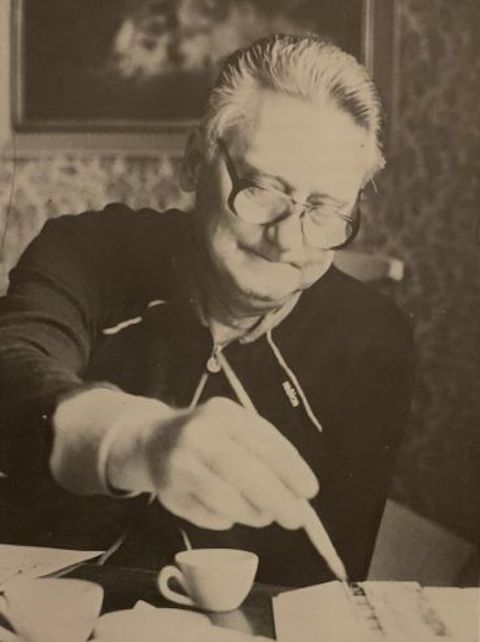
    Drawing by Cynthia Nelms Byrne