
| Hrvojka Mihanoviæ-Salopek, Zagreb Our Mother of Consolation Veneration of the Blessed Virgin Mary in the Diocese of Gospiæ-Senj We often travel to the Adriatic coast through the spacious, desolate, forested and mountainous expanses of Lika, without being aware that there used to be a highly developed center of medieval Croatian culture and Glagolitic scriptoria. Although the brutal Ottoman invasions wrought devastation, we are attracted to the residual traces of the original old Croatian civilization.  Dr. Hrvojka Mihanoviæ-Salopek: Lièka Majka od Utjehe
(The Lika Mother of Consolation), 11th DVD dealing with Croatian Mariological Heritage.
Production Real grupa d.o.o., Udruga Prosoli – Sveta Glazba (Musica Sacra)
Producers Alojyije Prosoli and Kre¹mir Renzo Prosoli
Back in the year 1185, the Diocese of Lika with its episcopal see in Krbava, today’€™s Udbina, was established at the Archdiocesan Synod in Split, as recorded by the historian Daniele Farlatti in Illyricum sacrum. A 13th-century gold cross belonging to the bishops of Krbava, with an inscription stating that it was fashioned in honor of Saint Mary, has been preserved. Our Lady was often the sole source of consolation during the period of ruthless Ottoman conquests in this region. The former Franciscan church in Udbina dedicated to Our Lady was destroyed in the aftermath of the tragic Battle of Krbava Field in 1493. A moving description of the battle was recorded in Glagolitic script by the priest Martinac in the second breviary of Novi, dated 1495. Near the archaeological excavations of the former cathedral of St. James, dating from the 13th century, a new shrine has been built overlooking Krbava Field as a lasting monument to the casualties of the Battle of Krbava Field and the many subsequent Croatian defenders. It bears the name of the Church of the Croatian Martyrs, in commemoration of all the known and unknown persons who defended the homeland and faith with their lives. The idea to build this church was conceived by Bishop Mile Bogoviæ. Construction on the church was completed in 2015 with the installation of a relief entitled The Glory of the Croatian Martyrs. |

Pilgrims visiting the Church of Croatian Martyrs in Udbina, Lika.

Bishop dr. Mile Bogoviæ

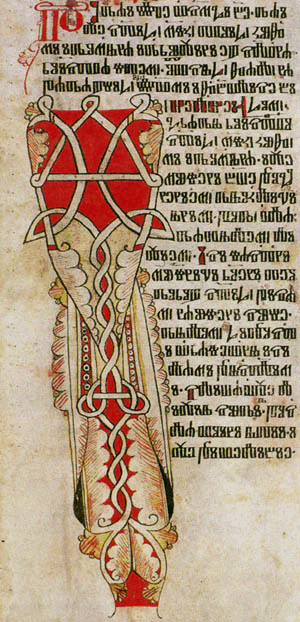
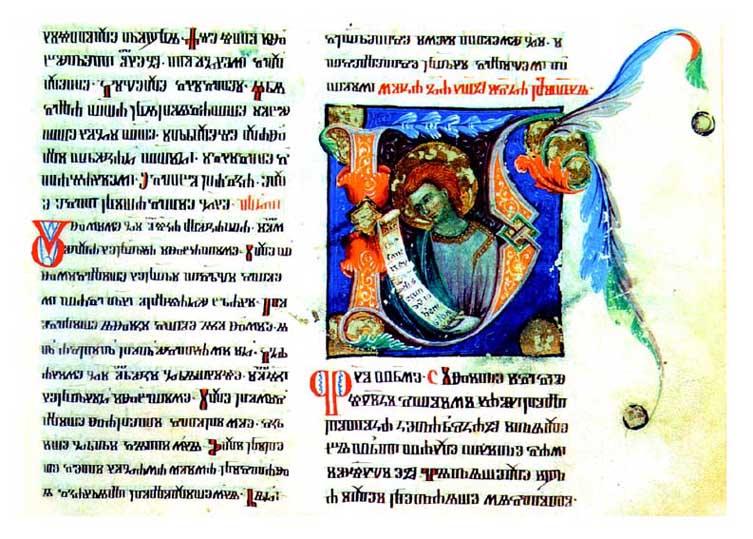
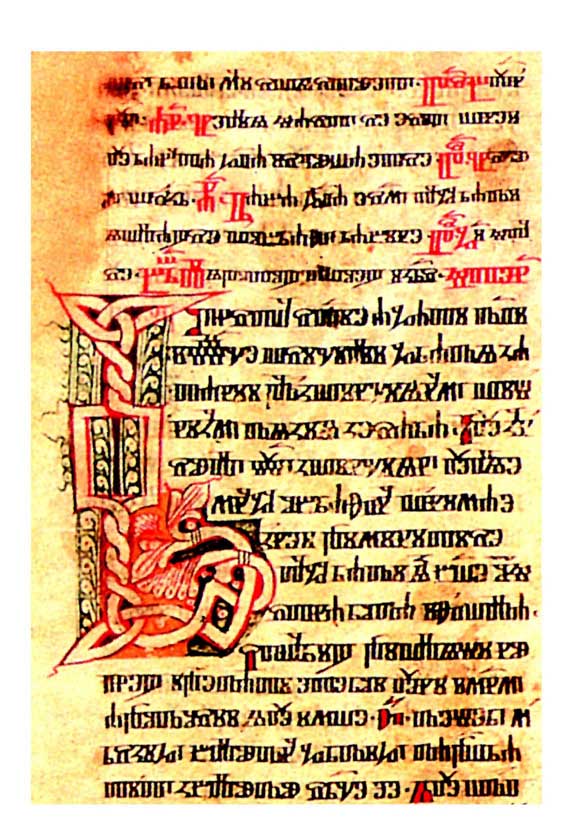
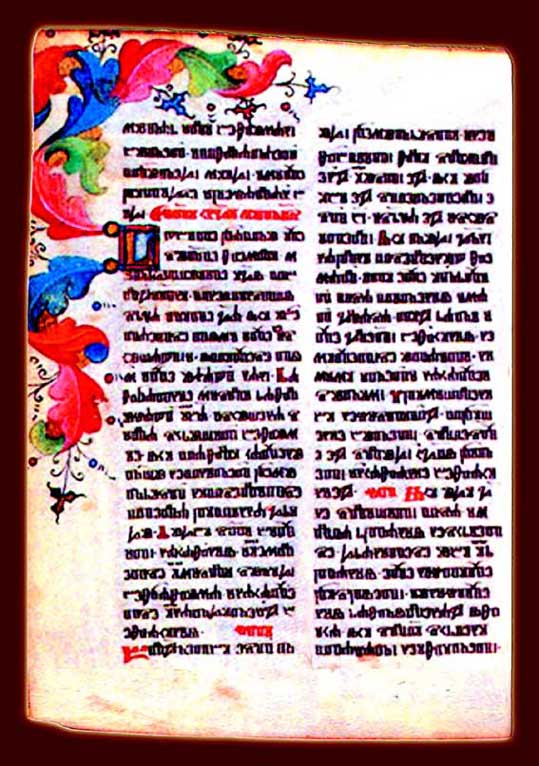
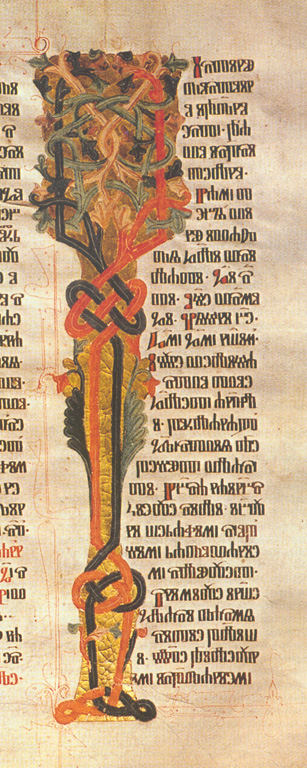
| Among the most illustrious Glagolitic scribes and calligraphers was Bartol of Krbava, who illuminated missals, many of which ended up outside Croatia during various wars or were not preserved in their entirety. In Krbava, Bartol illuminated the Berlin Missal in 1420, commissioned by Vlk, the abbot’s nephew, as well as the Beram Missal dated 1421, and the Roè Missal illuminated in the 15th century for an Istrian church in the town of Roè. Furthermore, in 1407, a Glagolitic breviary was brought from Krbava to Draguæ. Owing to the threat of Ottoman invasion, Pope Pius II, at the instigation of Prince Stjepan Frankopan, moved the episcopal see from Krbava to the town of Modru¹ in 1460. The Diocese of Krbava-Modru¹ was under the patronage of the Frankopan princes. The most famous bishop of the Diocese of Modru¹ was Nikola Modru¹ki, 1461-€’1480, a Latin writer and eminent bibliophile, whose huge library is today housed in the Vatican Library. The importance afforded to the veneration of Our Lady in the Lika region was evidenced by the construction of the Cathedral of Saint Mary in Modru¹, which was later destroyed by Turkish invaders. The Urbarium of Modru¹, a legal document regulating relations between feudal lords and vassals, was prepared at the direction of Prince Bernadin Frankopan in 1486. The copying of the Glagolitic manuscript Tkon Collection / Tkonski zbornik began during the reign of the same prince. It includes the poem Mary, Save Your Faithful/Spasi Marije tvojih vernih and testifies to the people’s anguish following the Battle of Krbava Field.
|
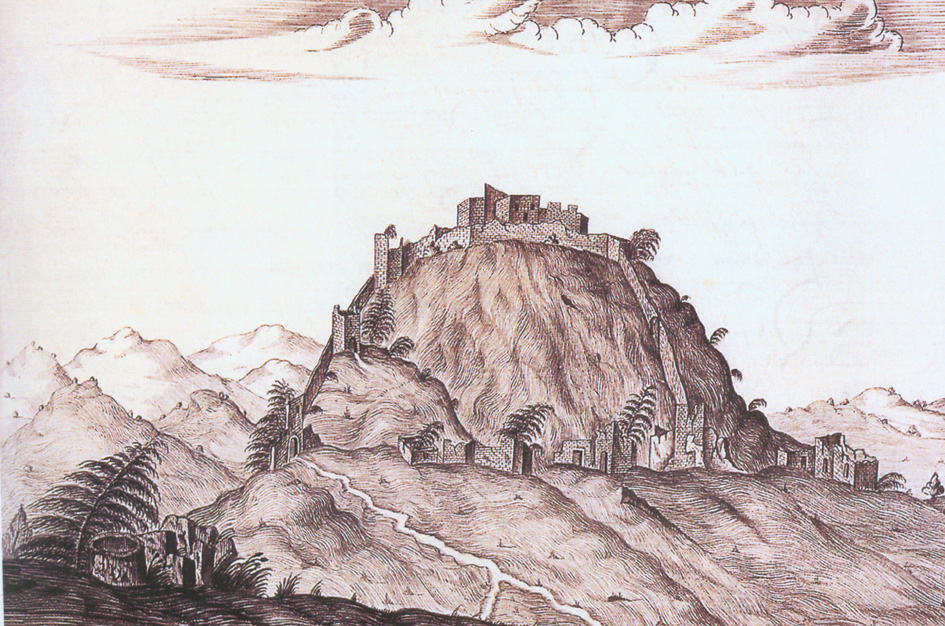
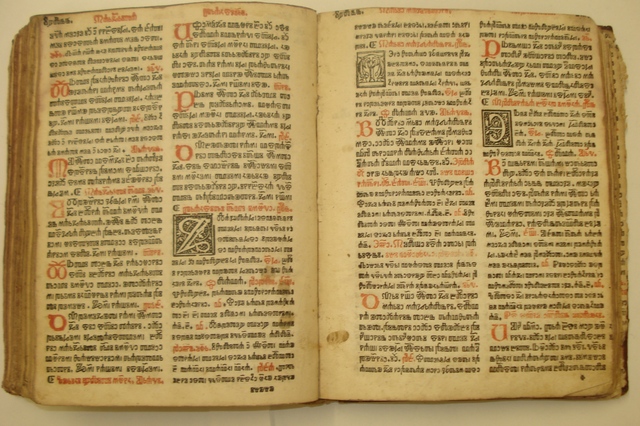
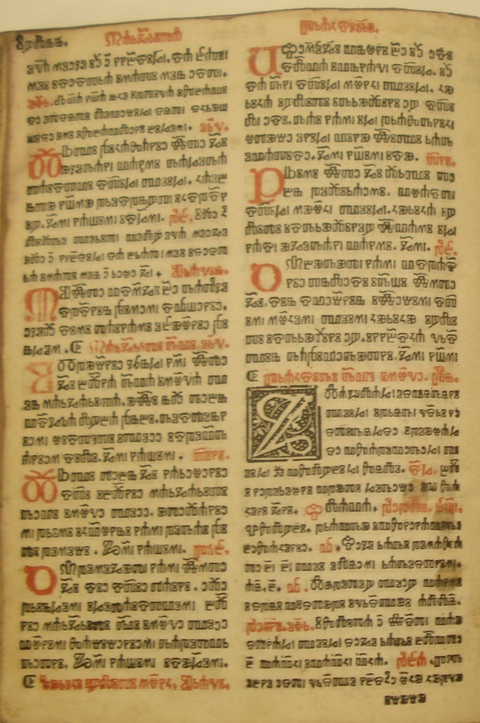
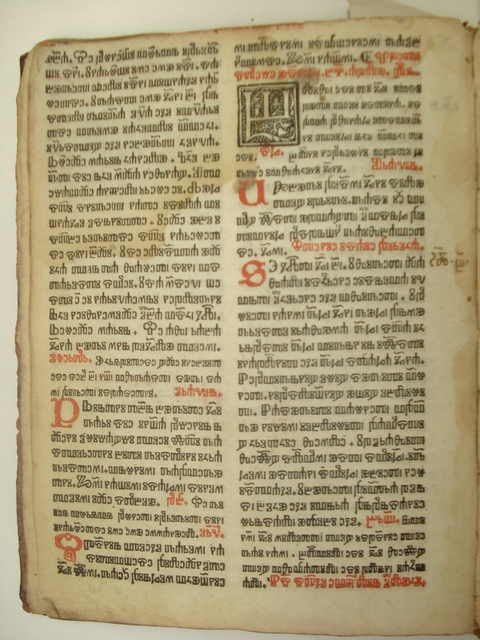
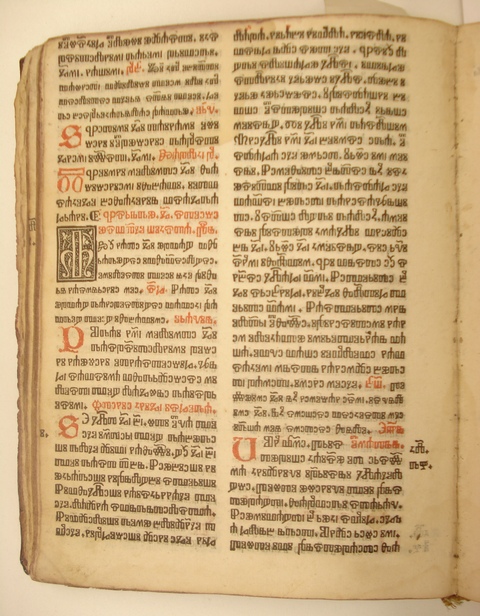
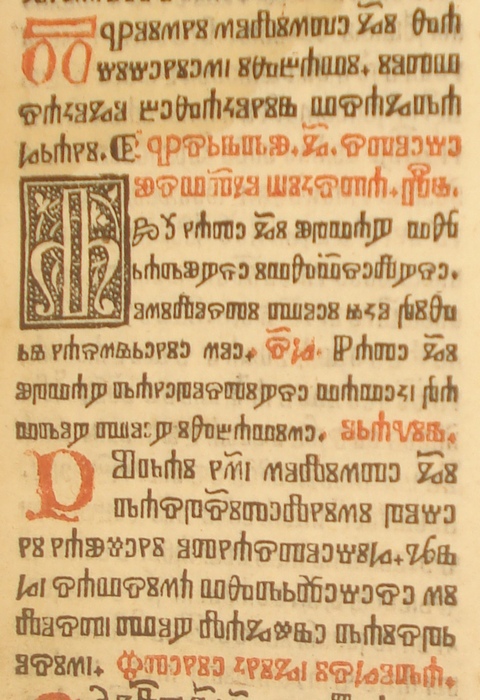
| Until the end of the 15th century, the Frankopan princes possessed an 11th-century codex written on parchment, Glagolita Clozianus. The Missal of Duke Novak represents an exceptional specimen of calligraphy that Novak Disislaviæ, a knight from Ostrovica in Lika, illuminated in 1368. The missal lettering was the model for the first printed Croatian book in 1483, Missale Romanum Glagolitice, believed to have been printed in Modru¹ or Kosinj. In 1491, the Breviario Glagolitico was printed in Kosinj, which testifies that Gutenburg’s invention was quickly adopted in Lika. In 1528, Fra Pavao Modru¹anin had a Glagolitic missal printed in Venice. In 1493, the last bishop of Modru¹, Kristofor Dubrovèanin, had to leave Modru¹ and move to Novi Vinodolski, where he lies buried. He was able to save the bishop’s crosier of the former Diocese of Krbava-Modru¹ from looting by the Turks, who forever altered the Lika cultural heritage. Academician Stjepan Damjanoviæ: “€œThe Lika and Krbava region is one of the traditional Croatian Glagolitic regions. It was ruled in its entirety or in parts by the noble Frankopan and Kurjakoviæ families, who were known proponents of Glagolitic script, Old Church Slavonic chant, Old Church Slavonic liturgy and so forth. The most distinguished groups of texts are the liturgical texts. From this region, seven complete missals and six breviaries have been preserved, a total of thirteen beautifully illuminated medieval codices, which testify in various ways to the high cultural level in this region.” |
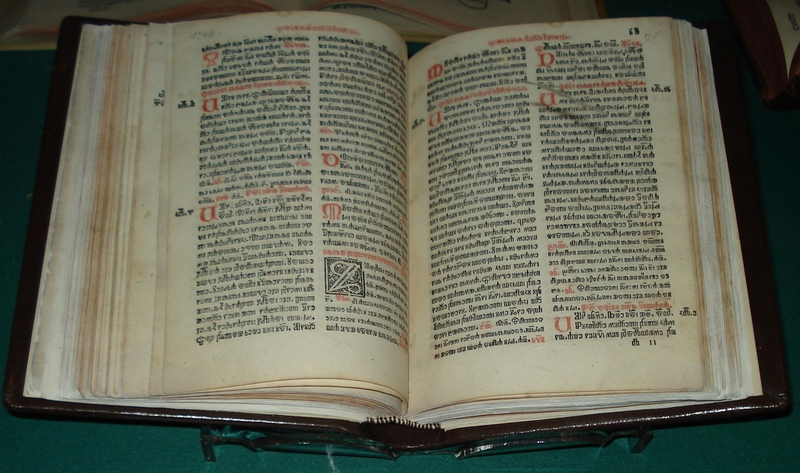
Missal of Pavao Modru¹anin from 1528. A sample kept in the Nationa and University Library in Zagreb.
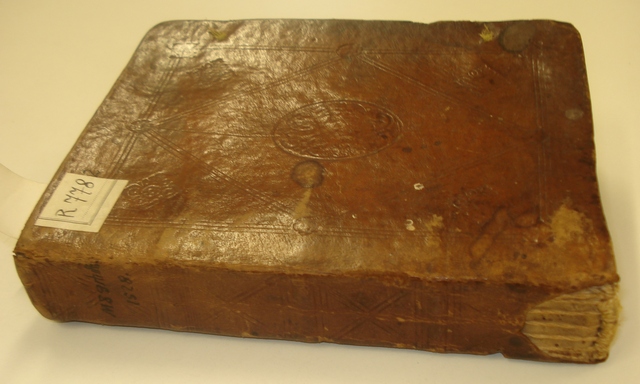
Missal of Pavao Modru¹anin from 1528. A sample kept in the Library of HAZU (Croatian Academy of Sciences and Arts), Zagreb.
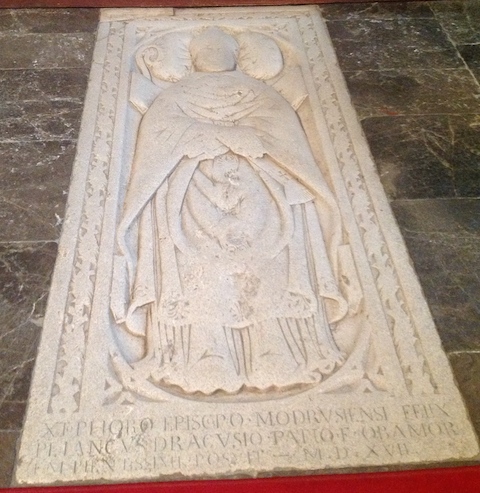
The grave of the Modru¹ bishop Kristofor (Xtophoro episcopo Modrvsiensi) in
in the church of Sv. Filip i Jakov (St. Philip and Jacob) in Novi Vindolski.
| Verses from a sequence in the first book printed in Glagolitic script testify that the faithful regarded Mary as their hope and paragon: “€œStar of the Sea, brightly shining with the light of all the stars.” The leading Marian shrine in the former Diocese of Krbava-Modru¹ is the Church of Saint Mary of Miracles in the village of O¹tarije in Ogulin. In 1459, Pope Pius II issued a bull with special indulgences, after which Prince Stjepan II Frankopan Modru¹ki had a sixty-meter long, three-nave Gothic church built, which was burned by the Turks in 1521. For a long time, its ruins served as a military fortress. In the 17th century, the intact apse became the nave of the church. The present church, considerably smaller than the original, was designed by Josip Vanca¹ and Stjepan Podhorsky in the late 19th century. Today, only the outer walls and Gothic entrance indicate the dimensions of this former Gothic basilica. Within the shrine, on the main altar is a baroque statute of the Madonna with Jesus, sheltering the faithful with her cloak. In this statue, Our Lady is represented as the helper, advocate and protectress of mankind. At one time, O¹tarije was on a pilgrim and trade route from Senj via Modru¹, to Dubovac and Zagreb. At the junction of northern and southern Croatia, a Marian church preserves the history of the Lika region. |

Kosinj breviary, Croatian glagolitic incunabulum printed 1491.
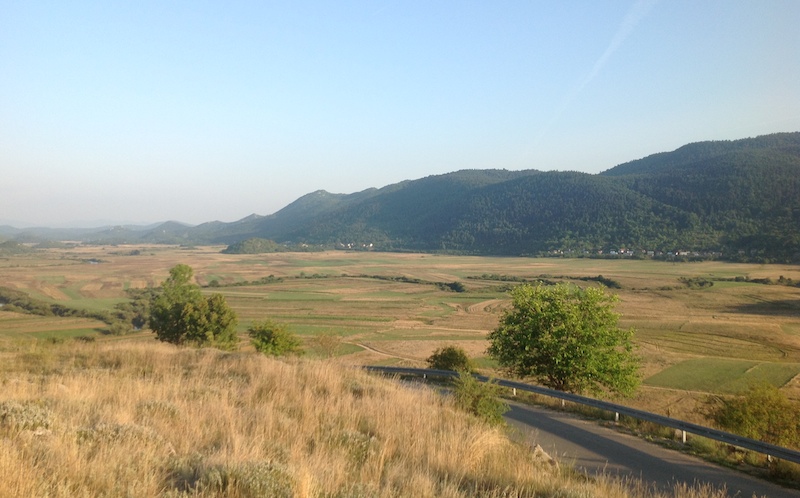
Kosinj valley, of about 5 km of length, is probably the most beautiful valley in Croatia.
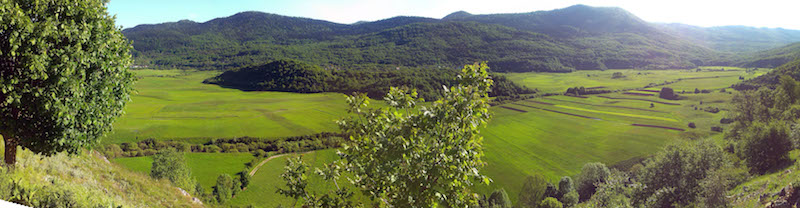
Donji Kosinj, Rudinka
Not far from Ogulin, on a hill rising between the Dobra River and Ribnjak Brook, is a very old shrine of the Ogulin Deanery, the Church of Mary of Consolation, popularly known as Tro¹marija, derived from the German Maria Trost. Not far from medieval ruins, today’€™s church was dedicated in 1755 and in 1767 was used by the Confraternity of Our Lady. In 1767, Pope Pius VI granted a special indulgence to those making a votive pilgrimage to this shrine. In 1943, this Marian church was severely damaged when the parish rectory was intentionally set on fire. During the communist era, attending church here was considered extremely undesirable. The poet Velimir De¾eliæ, Sr., described the turbulent fate of this Marian church in the collection Queen of the Croats:
The deep Dobra Canyon dives down into Ðula’€™s (Julia’€™s) Abyss. In the late 15th century following the fall of Modru¹, Prince Bernardin Frankopan built a fortress on the top of a cliff, which eventually developed into today’€™s Ogulin. Starting in 1570, this was the headquarters of the Thirteenth Border Regiment that fought against the Turkish invaders. Today, there is a museum of local history. Next to the museum is the Chapel of St. Bernard with the tomb of Prince Bernardin Frankopan. In 1781, construction began on the present Church of the Holy Cross. On the main altar is a crucifix and the figure of Our Lady of Sorrows. On the side altar is a painting of Our Lady trampling a serpent, a symbol of evil. The crystalline waters of the rivers Dobra and Mre¾nica course through the Ogulin Deanery. |
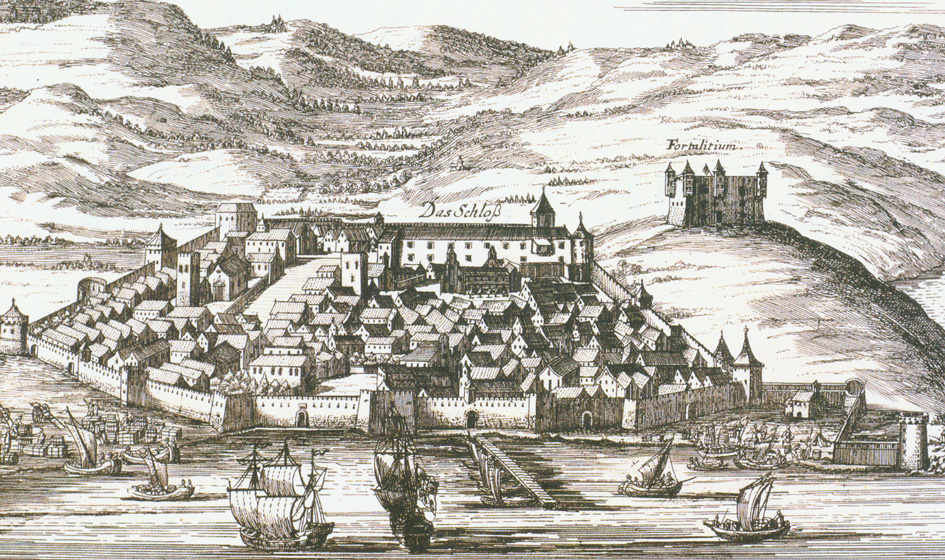
The city of Senj (Senia) on Croatian coast. Left to it is the Fortress of Nehaj.
| Churches were always built in the vicinity of the beauties of nature. In Le¹æe on the Dobra River, Our Lady of Help is venerated. In the Church of St. Nicholas in Lipa, near the Mre¾nica River, is a side altar dedicated to Our Lady of Carmel. On the Tounjèica River is a bridge from Roman times, where the ancient town of Tounj used to be located. Among the most beautiful churches of the Ogulin Deanery, the Church of St. John the Baptist in Tounj, designed by the architect Hermann Bolle, was built in 1892, with a side altar dedicated to Our Lady. In Zagorje, Ogulin, in the territory of the Parish of St. George, is the little Church of the Nativity of Mary in Ka¹evari, dating to the 16th century. The seat of the Deanery of Slunj is located in the town of Slunj, mentioned for the first time by name in 1390, in a document issued by Prince Ivan Frankopan of Krk. It is located where the Slunjèica River flows into the Korana River and is known for its thirty remarkable waterfalls. The town of Rastoke has preserved numerous old mills. From 1449 to 1572, Slunj was administered by the Frankopan princes, who built a fortress there. Subsequently, Slunj became a royal estate and was entrusted to Viceroy Charles of Habsburg. Franjo Frankopan Slunjski served as ban together with Bishop Juraj Dra¹koviæ, and is celebrated in poetry for having bravely defended Croatia from the Turkish Empire. Until 1578, there used to be an old Franciscan monastery here. Fra Franjo Glaviniæ wrote how the last friar, Bernardin Lopu¹iæ, saved a statue of Our Lady of Slunj from the Turks and brought it to Trsat. Our Lady of Slunj is the patron saint of migrants and the persecuted faithful. On the ruins of the Franciscan monastery, today’s Church of the Holy Trinity was built in 1726, where we find an altar dedicated to Our Lady. There is also the tomb of the Frankopans of Slunj, with the inscription Jacet in tumba Magnificus. A gilded statute of Our Lady has been preserved, which was presented as a votive offering by the head of the royal military command in Karlovac, Mate Magdiæ of Slunj, in the 19th century. |

| For Marian feast days, the people of the Slunj region like to gather in Kremenska Glavica, not far from Slunj, where the Chapel of Our Lady of Carmel was dedicated in the late 19th century. In the Deanery of Slunj, the fortress in Cetingrad, the seat of the Frankopans of Cetin, is of historical significance. In a former Franciscan monastery of the Province of Bosnia-Croatia, due to the Turkish wars the Croatian nobles chose Ferdinand of Habsburg as their king in 1527. Today, on the ruins of a former Franciscan Marian church built in 1726 is the Church of the Assumption of Mary, which was demolished by Serbian forces during the Homeland War and had to be rebuilt. In nearby Dre¾nik, it is interesting to see the old fortress, which is being renovated. On the southeastern border of the Diocese of Gospiæ-Senj is the Zrmanja river, with a multitude of waterfalls in the upper course, while in the lower course its beautiful canyon enters the region of the Archdiocese of Zadar and flows into the sea at Novigrad. The southernmost parish in the Diocese of Gospiæ-Senj is Palanka, in the Zrmanja valley, where the Church of the Nativity of Mary is located. This parish was marked by a grave historical injustice because during the Second World War Chetniks killed or expelled the Croatian population. Another Chetnik pogrom of the Croatian population occurred in Boriæevac in 1942, where a Marian church was burned and civilians, including children, were killed. This place was already known in the 13th century for the fortress of the old Croatian family of Borièeviæ, which was part of the Lapac family. These historical wounds and devastation have been difficult to heal. |


| In the territory of the Deanery of Udbina, which suffered greatly during its history, is the most famous Croatian national park, the Plitvice Lakes. A Marian pastoral center has been built here, where the magnificent waterfalls symbolically proclaim that Our Lady is an inexhaustible source of strength and refreshment for the life to come. Through Plitvice, we descend to the see of the Deanery of Otoèac in the Gacka River Valley. The sources of the Gacka River are among the cleanest springs in Croatia. Medieval Otoèac was also an important center for Old Church Slavonic and the former diocese. It was already mentioned on the Ba¹ka Tablet. In the vicinity of today’s Dabar, a breviary was written in Glagolitic script during the 14th century, ransomed from the Turks and is today housed in the Vatican under the title Borgiano Illirico 5-€’6. The Glagolitic Dabar Breviary dates from 1486 and is today housed in the Croatian Academy of Sciences and Arts. A legal document dated 1444, a grant issued by Prince Sigismund Frankopan, came from Otoèac. Furthermore, in 1486, in Kne¾eva Vas near Otoèac, the scribe Koluniæ transcribed the Koluniæ Quaresimale/ Koluniæev zbornik for the vicar of Gataèko Polje. In Otoèac at the time of the Homeland War, the parish Church of the Holy Trinity was severely damaged, but was restored in 2006. On its main altar is a statue of Our Lady. We also find two other Marian churches here, the Church of the Immaculate Conception, built in 1723 with the help of the noble family of Georg von Aichelburg, and Our Lady of Sorrows in Fortica, with restored medieval frescoes. The Chapel of SS. Fabian and Sebastian dates from the late 14th century. In Otoèac, there is an interesting memorial complex. |
| Prof. Dr.sc. Jasminka Brala-Mudrovèiæ: “We are in the Gacka Park of Croatian Memory, a Glagolitic park with thirty-two engraved stone cubes commemorating distinguished persons, important events or cultural facts from this region, which are also of significance on the national level. They begin with the story of Prince Borna and end with the Croatian state.” Shielded by Velebit are the undiscovered natural beauties of the Kosinj Valley with the Lika River Canyon and Lake Kru¹èica. In Kosinjski Bakovac is the inscription “An¾ Frankopan” in Glagolitic script. An important historical center of the Deanery of Otoèac is Brinje, which is mentioned in the 14th century as a crossroads of trade routes. In 1411, the Frankopan princes built the town of Sokolac. A museum exhibition is currently being set up here. In the Gothic Chapel of the Holy Trinity of Sokolac is an opulent Gothic Marian altar. In the left nave is a Pieta. On the Gothic vaults are the coats-of-arms of the Frankopan and Goray families. On the remains of the former medieval monastery of the Church of St. Mary, the present Church of the Assumption Mary was built around the year 1700. It was built by the liberator of Lika from the Ottomans, Father Marko Mesiæ. Fragments of tablets inscribed with Glagolitic script dating 1518 and the tombstone of Bartol Frankopan are housed in the church. Many Marian churches spiritually enrich the Deanery of Otoèac, such as Our Lady of Carmel in Kuterevo or Mary of the Holy Rosary in Lièko Le¹æe. In the vicinity is also the Marian church in ©vica. Among them, is the beautiful pilgrimage destination of Our Lady of Krasno on the slopes of Velebit. Velebit is a mythical Croatian mountain range, nearly 150 kilometers in length, overlooking the Adriatic and Lika, which, due to its intractability, invincibility and beauty, has become a symbol of the survival of the Croatian nation. In a clearing on the northern slopes of Velebit, Krasno Polje consists of a dozen or so scattered little villages from Illyrian and Roman times. The shrine is affectionately known as the Velebit Flower because legend has it that shepherds found a miraculous flower in the forest with the image of Our Lady, which would always return to a tree stump in the forest, the site of today’€™s little church. We find Krasno mentioned in a deed of donation issued by An¾ Frankopan in which Krasno is referred to as the boundary. We encounter the first historical trace of the church engraved on a stone water basin in 1641. The shrine was enlarged in 1716, owing to the efforts of its pastor, Fr. Ivan Vukeliæ. The Jesuit and poet Fr. Milan Paveliæ wrote fervently about the statute of Our Lady of Krasno: “White dove, glorious apple, mountain rose, Little Mother of Krasno!” |
We cross through Ba¹ke O¹tarije near the Church of the Visitation of Mary and go deeper into Velebit. (Our Lady of the Snows in the Velebit Valley, Krivi put)
Via a sharply curving road, we descend to Karlobag and arrive at the coastal part of the Diocese of Gospiæ-Senj. During the Middle Ages after 1251, Karlobag belonged to the Croatian family of Tugomiriæ, and in the 14th century to the counts of Kurjakoviæ. In 1580, Karlobag was named after Archduke Karl Habsburg, the military administer of the town. The 16th-century Church of St. Charles Borromeo that used to be here was destroyed in 1943 during the Second World War. A site of particular Marian veneration is the little Church of Our Lady of Sorrows. The old Capuchin monastery has been well maintained. Many beautiful works of art for Marian devotion have been preserved. |
| Along the old Adriatic highway, our path leads us toward Senj, the home of famous irregular soldiers, the Uskoks of Senj. The town begins beneath the 16th-century fortress of Nehaj, where there is a museum today. Senj was first mentioned in the 4th century B.C. in the periplus of the ancient seafarer Pseudoskýlaks, and then in the middle of the 2nd century as a Roman port. The Diocese of Senj was mentioned as early as the 5th century and in 1169 was restored. The three-nave cathedral of the Assumption of Mary was built in the 11th century. In the 12th century, Senj was given to the Templars and after the 13th century ruled by the Frankopans. In 1248, Pope Innocent IV granted Bishop Philip of Senj the famous privilege to use the Croatian recension of the Old Slavonic language and Glagolitic script in the liturgy, which was the earliest legalization of a vernacular language within the entire Roman Catholic Church. The Romanesque architecture of the cathedral in Senj was enlarged in the baroque style, particularly during the early 18th century during the reign of Bishop Adam Ratkay. During the Second World War, the main altar was destroyed by bombing, where today there is a statute of Our Lady with Jesus. The artistic works include a baroque Pieta by Pavao Riedl, a member of the Order of St. Paul the First Hermit. There is also a statute here of a Fisherman’s Madonna, taken from the Franciscan church, which is carried during processions. |
|
Of the former Franciscan church destroyed by bombing in 1943, only the tower was preserved. In this Franciscan church were buried the most distinguished Uskoks of Senj, who had battled against the Turkish Empire and Venice for centuries in defense of the city. A memorial to them is housed in the Senj City Museum. Starting in 1494, there was a Glagolitic Printing House in Senj, where incunabla were printed: The Senj Glagolitic Missal of 1494; the work General Confession/Spovid opæena, Miracles of the Glorious Virgin Mary of 1508. In the collection of religious works in Senj, the legacy from the time of the former Diocese of Senj is preserved, including portraits of the bishops of Senj and liturgical objects.
Not far from the sea rises the small Church of the Annunciation of Mary, known popularly as Our Lady of Art/Gospa od Arta, named for the cape on which it is located. We find a reference to the church in a document issued by King Matthias Corvinus in the 15th century. The church acquired its present form in the 18th century, when Senj was a city of prominent merchants and seamen. The Church of Our Lady of Art is a votive Church of seafarers, with many nautical details, such as anchors, helms, models of votive boats and benches decorated with shells. In the church garden is a monument to the Senj writers Vjenceslav Novak, Milutin Cihlar Nehajev and Silvije Strahimir Kranjèeviæ. Recalling the Angelus from the church towers in Senj, the poet Silvije Strahimir Kranjèeviæ always found a haven in his native city:
|
|
Through the Velebit Mountain Pass, we go back toward central Lika, toward the Deanery of Gospiæ. In the vicinity of Gospiæ in Klanac is the parish Church of the Assumption of Mary, built during the reign of Bishop Mirko O¾egoviæ of Senj in the early 19th century. In this church, Ante Starèeviæ, the father of the homeland and champion of Croatian independence, was baptized. The Lika village of Smiljan is the birthplace of Nikola Tesla, the famous inventor. The parish church in Smiljan is dedicated to Our Lady of Carmel and was built in 1864. The old tower in Peru¹iæ is well preserved. The town is dominated by the Church of the Holy Cross, on an elevation.
We arrive at the most important center of Lika, the city of Gospiæ, which, according to archaeological finds, was already inhabited during the Stone Age. From the era of the Croatian rulers, fragments of old Croatian braided ornaments with Glagolitic inscriptions have been preserved. There are also swords here from the 9th and 10th centuries. In 1729, Gospiæ became the headquarters of the Lika and Otoèac Regiments. The Church of the Annunciation of Mary was built from 1781 to 1783. During the Homeland War, the church was damaged by bombing and had to be renovated. On May 25, 2000, Pope John Paul II established the new Diocese of Lika-Senj, with the episcopal see in Gospiæ. The Marian church became a cathedral. Our Lady of Consolation encourages her people to persevere and remain in this historically turbulent but beautiful land, with its ancient historical Croatian roots.
|
|
Msgr. Zdenko Kri¾iæ: “Veneration of the Blessed Virgin Mary in the territory of today’€™s Diocese of Gospiæ-Senj has been strongly emphasized, even before the period of the Turkish invasions. It is sufficient to mention that in the Diocese of Gospiæ-Senj, we have eighteen parish churches dedicated to the Blessed Virgin Mary, to which should be added another twenty-four churches or chapels that were also built in honor of Our Lady. We can say that our diocese, the territory of the present Diocese of Gospiæ-Senj, suffered greatly at the hands of the aggressor during the Homeland War. Of the six deaneries into which our diocese is divided, five of them were heavily damaged or even destroyed, such as the Deanery of Slunj. However, the truth has once again been confirmed here that suffering strengthens faith. Through suffering, the people experienced a powerful sense of God’s proximity and the intercession of the Blessed Virgin Mary.”
|