
| St. Nicholas Croatian Catholic Church in Millvale, PA, just outside Pittsburgh, is home to one of the most remarkable works of church art in America, a series of 25 murals painted by celebrated Croatian painter Maxo Vanka. Painted in 1937 and 1941, the murals depict stories of immigration, war, labor, and injustice in vivid, expressive scenes unlike any others in a church. We will be joined by Anna Doering, managing director of the Society to Preserve the Millvale Murals of Maxo Vanka, a non-profit which works to conserve, protect, and interpret these incredible artworks and offers guided tours and educational programs. (Text from the caption to the above video by Anna Doering and Andrew Gustafson.) Murals by Maxo Vanka are not just Croatian cultural heritage. Unique. One and only. The planned film should have been done 50 years ago. |
| Society to Preserve the Millvale Murals of Maxo Vanka Mission To conserve and protect for permanent public exhibition the nationally recognized Maxo Vanka Murals within St. Nicholas Croatian Catholic Church in Pittsburgh, enabling the immigrant artist’s “gift to America” to serve as an enduring catalyst for community engagement and education, inspire social and cultural dialogue, celebrate diversity, and forge connections through reflections on the extraordinary American experience. Vision To establish a lasting national monument to AmericaAcEUR(TM)s storied immigrant experience, utilizing the ongoing conservation of the historic Maxo Vanka Murals to create a nexus for community engagement, education and socially and culturally oriented programming that evokes reverence for the past and inspiration for the future. Source https://vankamurals.org/society/ |
Louis Adamic: My Friend Maxo Vanka

My Friend Maxo Vanka by Louis Adamic 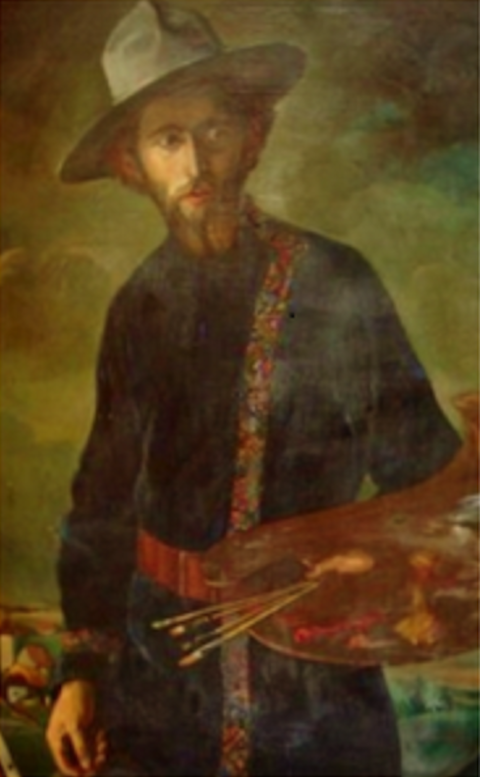 Maxo Vanka, autportrait
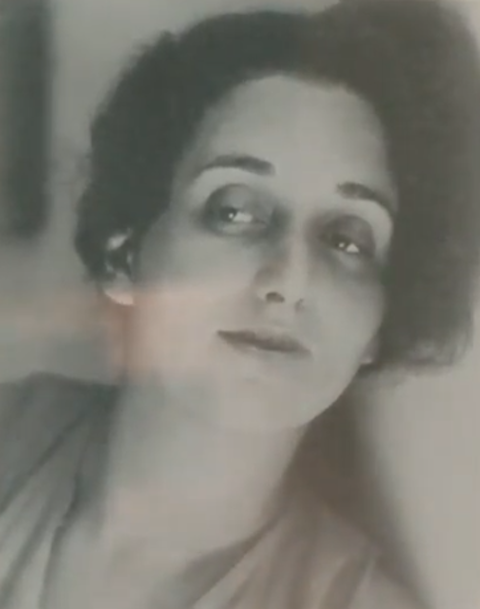
What first impressed me about him was his physical strength and stamina. He was slightly over five feet, frail-, delicate-appearing, but able to walk all day, as he and I did, over the hot stony roads on the island of Korchula and, unlike myself, not be tired in the evening. He swam for hours in the Adriatic, and I marveled how that bony, almost emaciated-looking body could contain so much energy and power of endurance, and be so agile, vivid, precise, and graceful in its movements. He was a superb cook, concocting all manner of delicacies out of the simplest materials, but he himself ate little more than a sparrow. Margaret entertained Stella and me with the story of their marriage. She was the former Margaret Stetten, daughter of the well-known Park Avenue physician and surgeon, Dr. DeWitt Stetten. In several respects the exact oppsite of her husband, she was a buxom young woman in her late twenties: frank, simple, direct. A former art student, she had touches of culture in other fields, speaking French and German besides English, and some Croatian. Her face, with its clear big eyes, was lovely, and she impressed me as “just woman,” patient, generous, without ambition for herself; immensely healthy and natural, deeply and quietly purposeful. DEAR MAXO:
I have a long story to tell, and much time in which to tell it. I am in Pittsburgh. Two things brought me here: my interest in you and your art, and my toothache. The toothache, itself, is a long story. I was unable to do anything about it, as I have told you, because of “economic conditions over which – I have no control.” The other day, however, my sister came to Washington for post-graduate work in nursetraining; she met a dentist at a Government hospital and arranged for me to meet him. He offered to pull my teeth without charge. He pulled seven of ’em, oh boy! … and I sold a bit of gold bridgework for $2.90 and got a three-day sick leave; so, having now both time and money, I bought a bus ticket to Pittsburgh. At twelve midnight, with a hundred aspirin tablets, which I was supposed to take one every hour, I boarded an old wreck of a bus. First stop Baltimore, with a p. 165 half-hour lay-over, giving me a chance to get a cup of coffee. An aspirin. Then, for two hours, to a one-horse town called Emmitsburg. The restaurant there is usually closed at 3:30 a.m., but this time it was open, waiting for some runaway boys to be brought home by the east-bound bus. Another aspirin. When the four fifteen-year-old boys arrived, I could sympathize with them; I had done the same thing at that age. At five o’clock the west-bound bus picked us up, to take us over the mountains. It, too, was light and rickety, and the road humped in the middle, rolling like a ground-swell, as well as having many turnings, going up and around mountains. Fog reduced visibility to zero, but the driver was a good one; we got to Pittsburgh at eleven, as per schedule.
I walked to the gallery, hoping to surprise you, but learned you had left the day before. I looked at your pictures through pain- and sleep-weary eyes, and could not see them till I stood well back …. They are wonderful; that’s all I can say. … While I was there, two poorly-but-neatly clad men of swarthy complexion came in. I guess they were your countrymen from Yugoslavia, for they exclaimed delightedly to each other, pointing at pictures that seemed to represent scenes from near their home region in the Old Country. Leaving the gallery, I wanted only to get into a horizontal position on an innerspring mattress, but I couldn’t afford a hotel room; so I walked the streets. I wanted to talk to a policeman about his pay, working-hours, and equipment, but every cop I saw was busy as could be. I went into a dentist’s office to ask a simple question – were my gums healing properly? He tried to high-pressure me into letting him make me a plate. I told him I was returning to Washington in a few hours; then he used high-pressure trying to sell me a thirty-five-cent bottle of mouth-wash. I like a cup of coffee at such a time in a cheap restaurant, where I can sit at the counter and nudge the guy next to me, and ask him, “What do you think Roosevelt is trying to do?” and get some kind of answer. But here I, somehow, walked into a drug store with a fountain, all stainless steel and marble and mirrors, which chilled me, and I almost turned around, but went in, anyhow. I ordered coffee and, because of the atmosphere in the place, I spoke to the clerk instead of my neighbor on the next stool. “Well, what do you know?” said I. “Not much,” said he. “How’s your razor blades?” I thought this was some kind of Pittsburgh gag, and made a gesture which might mean anything. And, presto! he dropped a milkshake on the stainless steel and brought forth from each vest pocket a package of Gillette razor blades. “We’re having a ‘special’ on these: two packs for forty-three cents.” I said I was a stranger in a strange city and had only enough money to get home. He whisked the blades out of sight and left me to my coffee. Conversation comes high in Pittsburgh. I thought to myself: “I’ll write to my friend Vanka and I’ll feel as though I talked to him.” So here I’m writing to you in the lobby of the Pittsburgher, hoping a bell-hop will not stop me as I go out, and charge me for the stationery. … Driving about the country, Maxo and I talked, and he gradually told me his story. |

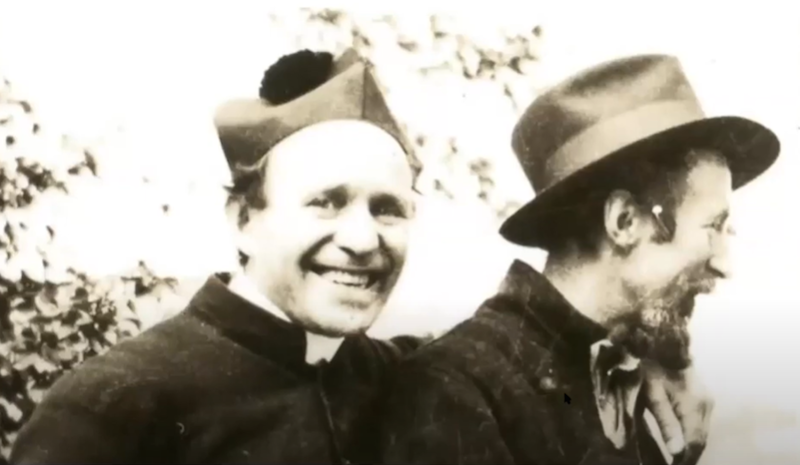
| p. 167 He lived in Brussels during the six years immediately preceding the war, and for some months during the war. There he began to grow a beard and acquired the already-mentioned nickname “Inri.” He became acquainted with Queen Elizabeth, formerly a Bavarian princess, who, Maxo suspected, knew whose son he was. She was extremely kind to him, sending him weekly bouquets of flowers from the royal gardens, inviting him frequently to musicales at the Court, and bestowing upon him other favors as though they were his due; while her husband, the late King Albert, was also graciously attentive to him whenever they met. At the war’s outbreak in 1914, Maxo was twenty-five, officially an Austrian, and, as such, internable in Belgium as an enemy; but with Queen Elizabeth’s great influence he was made an officer in the Belgian Red Cross, in which capacity he witnessed the German conquest of Belgium. As Queen of the Belgians, Elizabeth went into exile to England; but as an erstwhile Bavarian princess and a niece of the late Empress Elizabeth of Austria, she gave Maxo a letter addressed to the German High Command, requesting he be given every possible consideration without being subjected to humiliating examinations or questioning. The German military authorities did not know what to make of Maxo, but respected Elizabeth’s wish. Feeling a sudden need to go to his beginnings, to see Dora Yug in Pustcha Kuplenovo, Maxo wanted to return to Croatia, and was allowed to do so, in charge of a trainful of Croatian miners, whom war had caught working in Belgian mines, and who had been interned until the German occupation. In Croatia, being of military age, he was subject to serve in the Austro-Hungarian army; but, unwilling to be a soldier because opposed to killing under any pretext, he communicated with some one in high authority in the Hapsburg Empire who knew of his secret parentage and procured for him an exemption from military service and immunity from molestation on the part of any Austro-Hungarian official. He lived in Zagreb all through the rest of the war, devoting himself to art and the amelioration of war’s horrors in Croatia. He had considerable money, which had been sent him, through devious channels, by his mother; also, he sold the estate on which his maternal grandfather had established him; and he frequently visited Dora, his “real mother,” helping her financially, and generally giving full play to his inclination to favor the lowly. He spent much time living in poverty-stricken Croatian villages. Puzzled by, and deeply unhappy, about the whole mess of things, feeling now like a Hamlet, then like a Van Gogh or a character out of Dostoievski, he studied various religions and philosophies, including those of the Orient, and upon the base of his Catholic youth he built a structure of mystical concepts in an atmosphere of speculative freedom, which (and this is also important to remember if one wishes to be able to theorize about his subsequent adventures in America) kept his psychological makeup open to anything and, I think, helped to make him unusually attractive to a vast lot of different people. p. 168 After the war, when Croatia became a part of the new Yugoslav state, there was a great, Europe-wide currency confusion, in which Maxo lost most of his money, but he did not care greatly about thatAcEUR”he had enough left to build himself the little seaside villa on the island of Korchula which I have mentioned; he became professor of painting at the Academy … and thereupon led for many years a quiet, industrious life in Zagreb, till Margaret Stetten invaded it. In the spring, 1935, the Vankas took several weeks to drive from New York to California, stayed West most of the summer, and returned to New York early in the fall. Maxo brought back a load of paintings and sketches he had done during the trip, and he told me of encounters with people which were monotonously strange. An old man in Johnstown, Pennsylvania, who probably was an unemployed immigrant steel-worker, and whom he asked to pose for him for a quick sketch as he sat in a park, burst into tears when Maxo showed him the picture, and exclaimed “Oh, you think I am good!” A middle-aged Indian in Oklahoma came up to him at a filling-station and reaching for his hand, said, “How!” and passed on. In Los Angeles, a man made him a proposition to start a new religion, “because you have the personality for a religious leader,” and spoke of being willing to guarantee him a huge annual sum in profits therefrom. … During the rest of 1935 and through the winter months of 1936, my own work took me out of New York and I saw little of the Vankas, while the following spring they went to Yugoslavia, to attend to some of their affairs there, and they did not return till late in the autumn. I saw Maxo briefly soon after. He had just taken out his first naturalization papers, and was glad he finally was in America to stay, for in Europe a new war seemed almost a certainty. But he still felt uneasy about himself in this vast, strenuous New World. Did I really believe he would make a place for himself here as an artist? He was forty-six; happy with Margaret and Peggy, both of whom he adored, and they him; but he would hate to live off his wife for the rest of his life. Should he not open an art school? … Hardly knowing what to advise him to do, I chided him about his masculine pride. I had overworked the past year and was tired; Stella and I were going on a trip to Guatemala, and rest. Months later, early in 1937, when we returned, Maxo met us at the dock. He seemed dejected. He had worked hard all winter, had painted several pictures that he considered better than anything he had done in Europe, but … there was the old “but”: he was not earning anything. “Don’t be silly, Maxo,” I said, repeating what I had said to him many times before, “you’re doing Margaret a favor by living on her money.” He was seriously thinking of starting a school of painting; he had several prospective pupils. He accompanied us from the pier to our apartment, where I found a basketful of mail that had accumulated in our absence … and one of the first letters I opened was from a Croatian priest of whom I had not heard beforeAcEUR”the p. 169 Rev. Albert Zagar, pastor of the Croatian Catholic Church of St. Nicholas at Millvale, an industrial suburb of Pittsburgh. He inquired if I knew the whereabouts of Mr. Vanka, explaining that his parishioners and he were thinking of “decorating” their church with murals, and would like to know as soon as possible if Mr. Vanka painted murals and was interested, for they hoped to have the job completed by mid-June, the time of one of their celebrations. “Maxo,” I said, handing him the letter, “your future in America seems about to begin. This looks like the opportunity you’ve been hoping for.” Maxo hastened to Pittsburgh to see the priest and the church, returning in a few days ablaze with creative enthusiasm. Father Zagar, he bubbled, was a grand fellow, a Franciscan and, in many respects, a true follower of Saint Francis of Assisi; instinctively intelligent, simple, direct, well-intentioned, and much beloved by his people, who were exclusively Croatian immigrants and their American-born children, most of whom were for letting him do what he liked with the church. He had been twelve years in America, and parish priest of St. Nicholas for half that time. The murals were his idea, and he was giving him (Maxo) entire freedom to paint what he liked on the walls, so long as, at least, some of the pictures were to be of a religious character. Maxo told me further that, along with the parish house and the parochial school, which was in charge of nuns, the church stood atop a knoll, overlooking a vast industrial area, which included a street-car barn, an extensive railroad yard, and several factories and mills, with rows of workers’ houses. It was not a very large church, nor an architectural masterpiece. “But,” said Maxo, “I think I can do something with it. In fact, the walls, although mostly concave, curving in all directions, are well-nigh ideal for murals. It is a marvelous opportunity, and I would be willing to paint the whole place for nothing.” But the priestAcEUR”a thoughtful, generous man who momentarily had a considerable sum of money at his disposalAcEUR”had insisted on giving him a substantial advance on the amount he had himself suggested in payment for the work, and to which Maxo had agreed. “On April ninth the church was ready for me, and I locked myself in; and, with all my materials on the scaffold, I began the Madonna and Child, which, because of the curvature of the wall above the main altar and the size of the figures, was very difficult to do. Also, I had never done anything like it. To save time, I had decided not to draw even an outline of the figures before I started to paint, but to work directly with paint, as I would upon canvas; and as the paint I used dried very quickly, I had to work extremely fast and carefully. But I felt fine andAcEUR”except for the few minutes I took out for lunch, and the few minutes for supperAcEUR”I worked from nine in the forenoon till two-thirty the next morning. Or, rather, I discovered that it was two-thirty when I came into the parish house, where I had my room, for I had determined to have no watch with me on the job. My reason for this was that if I had the watch where I could look at it and see how late it was getting I might feel tired before I was really exhausted for the day, and quit earlier. Throughout the two months I never took my watch with me into the church. |
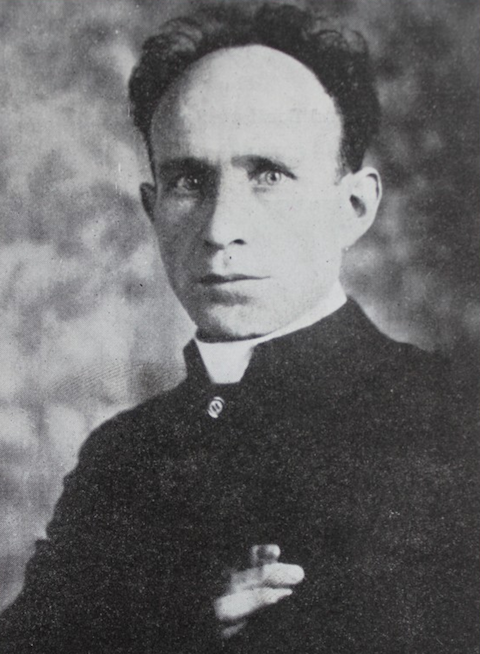
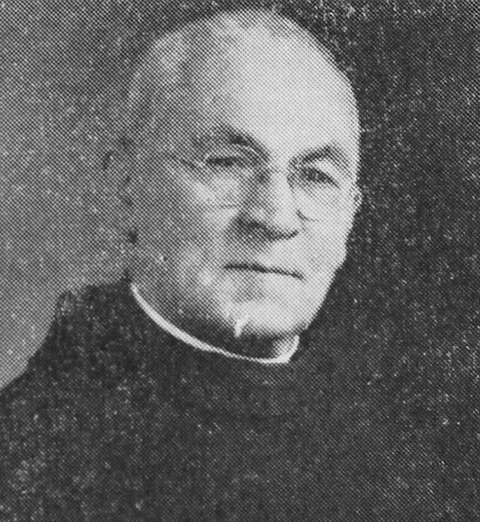

| p. 175 “I assumed Father Zagar had gone out; and after a time, still feeling strangely cold and uneasy, I decided to quit, though I sensed it was still earlyAcEUR”perhaps only twelve-thirty. I used up what paint I had made, cleaned my brushes; then climbed down, extinguished the lights, and went out, and into the parish house. “Entering, what do I see but Father Zagar asleep on the couch in the livingroom. Waking with a start, he jumped up and said, ‘Hello, gospodine profesor!’ Then, looking up at a clock he cried, ‘Oh my, it’s past one o’clock! Why didn’t that woman wake me?’ He meant his cook and housekeeper, Mrs. Dolinar, an elderly widow, also known as Dolinarka. He was angry, explaining he had lain down at about nine, having instructed Dolinarka to wake him at eleven; but she had apparently gone upstairs and also fallen asleep. “Now, this was strange! I said to Father Zagar, ‘Do you mean to say that you have lain asleep here since nine o’clock?’AcEUR”‘Why do you ask?’ said Father Zagar. I smiled and asked him to answer me, and he said, ‘I believe I fell asleep soon after I lay down; by nine-thirty, anyhow.’AcEUR”‘And,’ I asked, ‘you’ve been asleep ever since?’AcEUR”‘Yes.’AcEUR”‘Are you sure?’AcEUR”‘Sure!’ ” ‘Well,’ I thought, smiling to myself, ‘all this is easily explained now: he is a sleepwalker.’ Father Zagar asked, ‘Why do you smile?’ I told him; then he laughed and lighted a cigarette, pacing about the room. I sat down. ‘You saw something?’ he asked then. AcEUR”‘I saw you in front of the altar, making gestures like this’ (illustrating). ‘Sure you saw me?’ asked Father Zagar, very serious. I said I had not looked very carefully, but had assumed it was he; now, if he insisted that he had been asleep ever since nine-thirty, I was impelled to think he was a somnambulist. We laughed. “Smoking nervously, Zagar said, ‘Believe me, gospodine profesor, I am not a sleepwalker. I was really on that couch from about nine till you awakened me.’ He hesitated, then asked, ‘Tell me: have you, since coming here, heard there is a tradition that this church is occasionally visited by a ghost or some strange phenomenon?’ I answered, ‘No.’AcEUR”‘Are you sure?’AcEUR”‘Yes.’AcEUR”‘Well,’ Zagar went on, ‘there is a fifteen-year-old tradition to that effect, dating nine or ten years back before I came here. I have never seen, or had any experience with him, or it, but not a few people say they have. Before I came, there were quarrels and arguments among the Croatians hereabouts pertaining to this ghost, or whatever it is. I am a sceptic as to ghosts and apparitions, and never believed the tradition, not really, but sometimes, listening to people speak of it, I admitted there might be something to itAcEUR”some phenomenon which we do not understand …. Do you know why I asked Dolinarka to wake me at eleven?’AcEUR” I said, ‘No’AcEUR”‘Do you know why you always found me here so late, when you came out of the church ?’AcEUR”‘No.’AcEUR”‘Because,’ said Zagar, ‘ever since you decided to work late, I was half afraid that, alone in the church, you would have some “experience” and get frightened and possibly fall off the scaffold; and every night since you began to work, except today, I have stood watch outside the door between eleven and one. You never saw me, for I was outside, behind p. 176 the door, looking in, keeping still, listening. My purpose was to rush in, in case you cried out, or started hastily to climb down.’ “I said, ‘Father Zagar, you aren’t crazy, are you?’ He answered, ‘I don’t know, but I don’t think I am!’ We laughed again, then had some coffee and cake and canned peaches; and, discussing the thing, decided that hereafter Father Zagar would come into the church at about eleven or before every night I worked, and stay with me till quitting-time. “So the following night he came in, announcing it was quarter to eleven, standard time; then, by way of horseplay, he called out, ‘Come on, ghost, show yourself and see if the gospodine profesor and I are afraid of you.’ I laughed, and went on working. Father Zagar climbed up, bringing me a pot of coffee; helped me with paint-mixing-something he did regularly thereafter; then went down again, lest he distract me, for I had started on the new mural, Religion in the Old Country, on the left side of the main altar … and suddenly there was a strange click or knock in back of the church, beneath the choir. It sent a chill through me. ‘Hear that, Father ?’AcEUR”‘What ?’AcEUR”‘That strange knock back there ?’AcEUR”‘Yes; but wasn’t it a creak in the scaffolding? ‘AcEUR”‘I don’t know,’ I said; ‘I don’t think so.’ It sounded terribly strange. I kept working as we talked. “ThenAcEUR”another click or knock, the same as the first, but in another part of the church. I turned around and looked down at Father Zagar, who stood on the other side of the communion table. He turned, to face the rear of the church, and in a tense, sharp voice challenged, ‘Come on, show yourself, if you are a ghost, or whatever you are; or speak, if you can. We’re busy here, the gospodine profesor and I, decorating the church, making it beautiful, and we should like to be let alone. If you are a ghost; if you are a dead man, go with God,AcEUR”peace to you: I shall pray for you. Only please don’t bother us.AcEUR”‘ “I interrupted him with a yell, for just then I saw himAcEUR”the ghostAcEUR”or at least let me call him thatAcEUR”sitting in the fourth pew. I saw him very clearly: a man in black, an old man with a strange angular face, wrinkled and dark, with a bluish tinge. He leaned on the front part of the pew, looking upAcEUR”not so much at me as at everything in general: a sad, miserable gaze. I saw him for just a moment, then-nothing. He vanished. But I felt cold all over, at the same time that sweat broke out of every pore of my body. I got off the scaffold, which was not high for that mural, and barely managed not to fall off the ladder, I was so frightenedAcEUR”only the sensation I had was more than fear: something indescribable, but related to the milder, more remote sensations I had experienced on the two previous evenings when I saw him gesticulate in front of the altar. “Rushing to me, Father Zagar put his arms about me and asked what was the matter, but I had no time to talk with him. I pushed him aside and rushed out of the church as fast as I could. Outside, the dogs were barking. They rushed to me, yelping and whining. “Father Zagar, who followed me out, had not seen the ghost; and, taking p. 177 the attitude of the sceptic again, he said I had probably only imagined I saw him. ‘But,’ I insisted, ‘I really saw him, FatherAcEUR”with these eyes, as I see you now.’AcEUR”‘You imagined it!’ Zagar repeated, and I became angry and went to my room and made a sketch in my notebook of the manAcEUR”the ghost, whatever he wasAcEUR”as I clearly recalled him sitting in the pew. “I calmed down, went into the bathroom, and changed my sweat-soaked underclothes. Father Zagar came up and I went down with him. We begged one another’s pardon, I had coffee and cake; we talked, speculating, Father Zagar telling me what the tradition had to say; and shortly after one, when I felt perfectly quiet again, we returned to the church, where also everything was entirely normal, and I resumed work. Zagar stayed with me till I quit, then I had more coffee and he went to his room, and I to mine. Exhausted, I fell asleep at once. “In the morning Father Zagar told me of the following occurrence: A few minutes after he had turned out the light over his bed, there were three clear and distinct clicks or knocks in the closest proximity of his bed. The knocks were not as if some one struck a piece of wood or metal or a wall, but something different and strange, as though one snapped one’s fingers, yet not quite that, either … as though they came out of infinityAcEUR”the same that we had heard in the church. ‘They touched my heart, and everything in me with a long chill feeling,’ he said, ‘and, though I could not see him, I knew there was a dead man in my room. I blessed myself and began to say an Ave Maria, and switched on the light and saw nothing. The chill feeling in me persisted. I was frightened and angry, and said: “Who are you? Why don’t you show yourself to me, when you do show yourself to Mr. Vanka? I am the boss here. I am the pastor. Talk to me if you can. Let’s settle this once for all. Have some consideration for us. I work hard all day and I am tired, and I want to sleep. Poor Mr. Vanka has a task on his hands; you should let him alone. But now talk to me and tell me what the trouble is. I shall pray for you.” I waited, but there was no reply, so I turned out the light, said a paternoster and an Ave Maria for the peace of his soul, and the cold feeling left me and, I think, I soon fell asleep.’ “The next night, and for two or three nights after, we were left in peace, and I worked right through, finishing Religion in the Old Country and beginning Immigrants’ Religion in America, in which I included a portrait of Father Zagar. He posed for me in the daytime, then came in late in the evening. He was beginning to credit himself with sending the ghost away. It took a fellow like him, by golly, to deal with ghosts and spirits and such strange phenomena. He had given the ghost a piece of his mind the other night; now he stayed away. Ghosts, apparitions, and things of that sort, he said, were like people. If you talk to them as though you mean it, they listen to you. … “Father Zagar came in shortly before eleven, unlocking and locking the door, and cracking his usual jokes, boasting he had sent the ghost packing … when the whole komedia started all over again. There was again that strange, p. 178 awful knock or click in one corner under the choir, then another in the other corner. ‘O-ho!’ cried Zagar, scratching his head. I used up what paint I had in the pail, then laid everything aside and got off, intent on fleeing: for I was abruptly all cold inside and beginning to drip with perspiration. But the Father detained me, seizing my arm, suggesting we face the situation. ‘Not I,’ said I, and made for the door, Zagar after me, seizing me again. “There was another knock, I could not tell just where, but it cut into me like a knife. Then I saw himAcEUR”the old man in blackAcEUR”moving down the aisle altarward. Terrified, horror-stricken, panicky are faint words to describe my sensation. ‘Look, Father,’ I yelled, ‘there he goesAcEUR”to the altarAcEUR”he’s at the altarAcEUR”he’s blown out the light!’ The last few words I shrieked out with more lung power than I ever thought I possessed, and simultaneously lost sight of the figure, and began to feel a trifle better. “ThisAcEUR”his putting out the lightAcEUR”is, perhaps, the most important point in the story. The light was the sanctuary lamp. It usually hangs in a special fixture depending from the ceiling above the altar. It burns all the time; the nuns next door see to it; the tallow and wick inside the bulb need to be changed only about once a year; and the sisters assured us afterwards that as long as any of them had been thereAcEUR”for eight years, at any rateAcEUR”it had never been out. The glass bulbs around the flame are so arranged that it is almost impossible to blow it out. No wind or draught can touch it; besides, all the doors and windows were closed …. The light usually hangs, as I say; but now, because of the scaffolding, the fixture had been pulled up and the lamp stood like a huge red cup on the altar, where the ghost, or whatever it was, now blew it out with a puff of breath. “When I yelled that he had put out the light, Father Zagar demanded, ‘What light?’ I said, ‘The sanctuary lamp! There! Can’t you see it’s out?’ Bome, by golly!’ he exclaimed and rushed to the altar, where he saw that the wick in the lamp was still smoking. He touched the lamp; it was hot. The flame had, obviously, just been extinguished. “Meantime, I had left the church. The dogs were yelping and squealing outside. Father Zagar followed me out. ‘Till now,’ he said, ‘I still had a glimmer of doubt. I thought, possibly, it was your fantasy. I thought, possibly, I had imagined the knocks in the church and by my bed the other night. But now I believe. Bome, now I believe. There is something here. That light was blown out just when you said it was.” “At one o’clock we returned to work again, and everything was normal. Whereupon we had two .or three ‘good’ nights, as we began to call those when nothing happened. Then ‘he’AcEUR”we called him ‘he’AcEUR”came two or three nights in succession. I had no watch, but when ‘he’ came I knew it was somewhere between eleven and twelve, standard time. ‘He’ paid no attention to the fact that meanwhile Pittsburgh had gone to daylight-saving. One night Father Zagar tried to fool me when he came in, apologizing he had fallen asleepAcEUR”it was nearly one-thirty; wasn’t I quitting yet? I might readily have believed p. 179 this under ordinary circumstances for I was weary enough for it to be one-thirty; but not this time. He no sooner spoke than the chill feeling pierced me, which was always the signal, and I said, ‘Father, you’rl! a fibber; it’s somewhere between eleven and twelve, standard time. I must go.’ “Almost always I left the church immediately I got ‘the signal,’ as I called the chill feeling. I tried to ignore it a few times, and worked furiously. I put blinders, made out of newspapers, on either side of my face, like a horse, so I would see nothing but the SPot on the wall where I worked. I stuffed cotton in my ears. No use! At the end I had to go; the sensation and the situation were intolerable. I saw ‘him’ on each of these occasions when I stayed after getting ‘the signal.’ He looked perfectly mild, pensiveAcEUR”like, sitting in the pew or moving up and down the aisle; yet he filled me with indescribable horror, with something higher and stronger than fear; what, I cannot tell you. Father Zagar, who also got ‘the signal,’ though usually later than I, and not as terribly, wanted me to stay and ‘face the ghost and the whole business’ with him, but I could not. Twice, when he tried physically to detain me, I pushed him violently away, bashing him once against a wall, the second time against a door, and he suffered bruises. He had locked the door and I was so crazy with that fear which was more than fear that I told him I would kill him unless he forthwith let me out. “This went on throughout the jobAcEUR”for two months. When ‘he’ came, ‘he’ came always between eleven and twelve, standard, except once, early in June. On that occasion, he came earlier in the evening, perhaps at nine or nine-thirty, but gave me no ‘signal.’ The feeling I had was unpleasant, but not intolerable; I put on my newspaper blinders, stopped up my ears, and worked. ‘He’ burned candles on the chandelier in front of the little altar on the right from the time ‘he’ came till Father Zagar entered the church at eleven. ‘What’s this smell?’ demanded Father Zagar, entering. I said, ‘He’s been burning candles all evening.’ Then Mrs. Dolinar, the, housekeeper, came in, too, in the wake of the priest, who told her what I had said. The two of them inspected the chandelier; it was full of molten tallow, while one wick, burned almost to the bottom, stillA,. flamed. Mrs. Dolinar put it out. ” … This is my story,’ concluded Maxo, “absolutely true, as I know it. I think I am not crazy. Nothing so intense, so terrific has ever happened to me. A ghost! I think soAcEUR”something, some one, that is not substantial with flesh and bones and blood. An astral body, if you likeAcEUR”something: call it what you like. I know that I had a most terrific experience. . . .’ Listening to him,, I was thinking, “This is too weird even for Maxo.’ Not that I questioned his statement about having had an intense and terrific experience. Nor did I doubt that Father Zagar would substantially corroborate his story, and I knew both of them well enough to feel they were genuine, beyond any charlatanry or trickery. But the “ghost,’ to me, was a ghost in quotation marks. I had long since become settled in my belief that once we p. 180 died we were dead; that our personalities disintegrated into atoms, molecules and other such basic life-units, which then became available as material in the construction of other life forms. The matter of the sanctuary light going out, I realized, was hard to explain, save as a coincidence; but I inclined to believe that Maxo’s experience was largely, if not entirely, of his own creation. I did not doubt his saying that no one had told him oj the fifteen-year-old “ghost” tradition, which was the creation of a few superstitious persons, the like of whom might be found in any group; or the result or manifestation of a collective psychosis or illusion; but I thought that, since the tradition existed, it was not beyond Maxo to get wind of it, somehow, via his acute, penetrating intuition, which was a matter of his whole strange background. After being a few days in the church, he could have sensed it. He was somewhat like D. H. Lawrence, who had the ability to sit down immediately on arriving in a city he had never visited before and write an article about it. I, myself, who was not nearly as acute and intuitive as Maxo, had lately lived in a three-hundred-year-old house in the city of Antigua, in Guatemala, and dimly sensed some of the things that I later learned had happened there long ago. Before that, in Yugoslavia, while interviewing King Alexander, I had had a feeling, which had amounted almost to knowledge, that he would be killed before long, and then had predicted his assassination in print in America a year before it occurred. … Of course, Maxo’s conscious mind, with which he told me the story, had had, I figured, no part in creating the “ghost” and the whole terrific drama he had narrated to me. The “ghost,” I theorized, was a creature of his subconscious. But why did his subconscious create him? Perhaps to keep himself constantly stirred up so he could carry out the great task before him. Perhaps, way down in him he doubted that he could complete the job on time, and his subconscious, getting wind in one way or another of the ghost tradition, had created the “ghost” to have him there as an excuse in case of failure. Other such thoughts occurred to me. I expressed them to Maxo. He smiled, complimenting me on my resources as a psychologist, but shook his head; I was all wrong. We let Margaret and Stella in on the story, but, both sceptics, they joined my party against Maxo. He Was asked, “Why didn’t you quit when these dreadful things began to happen?” He answered, “I thought of quitting, but how could I return to New York and face all of you? How could I have explained it to you? You would all think I had gone crazy. Besides, how could I leave Father Zagar with a partly painted church? I thought of painting only in the daytime, but then I could not possibly have finished in two months as I had agreed. I took that agreement very seriously, for I had entered into it, not only with Father Zagar, but the whole church committee. The parishioners generally were very much interested in what I was doing. There was much talk. Everybody was expecting me to finish by about June tenth. Also, when I started the job, the p. 181 big Pittsburgh newspapers printed stories about me and my project; and now, if I quit, the thing might get into the papers in some way that might make me look ridiculous and be ruinous to my future in America. … ” Maxo showed us the sketch of the ghost in his notebook. This was no proof to us. We did not dispute that he had “seen” “him” after his subconscious had created him. We asked him: did anyone have any theory who the ghost was? “The popular belief is,” said Maxo, “that ‘he’ is a dead priest who, while alive, took money from parishioners for masses which he never read, and who had not read his breviary daily and had neglected his other priestly duties; and is 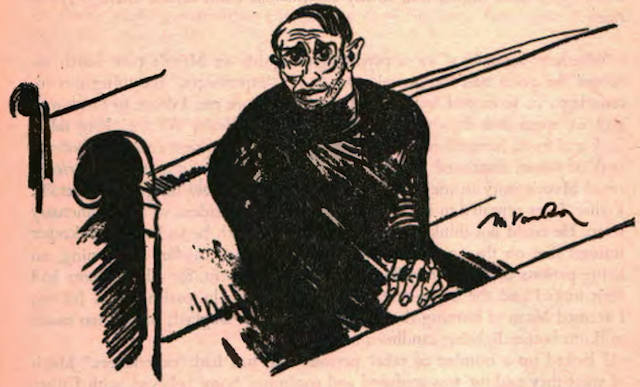 now coming to the church to make up for his sinful negligence during his life. Father Zagar inclines to this theory; so does the other priest there, the Rev. Nezich, who has never had any ‘experience’ and, not wanting any, never enters the church after dark. Mrs. Dolinar accepts the ghost as a permanent institution, and has no fear of ‘him.’ The same is true of the parishioners, who believe that ‘he’ comes. They say the thing to do is to stay out of the church late at night, and let ‘him’ have the place to ‘himself.’ |
| Acknowledgement Many thanks to Mrs. Marta Pirnat-Greenberg, lecturer at the Department of Slavic and Eurasian Languages and Literatures, University of Kansas (Kansas City), for having sent me a copy of the article by Louis Adamic. D.(R). |