
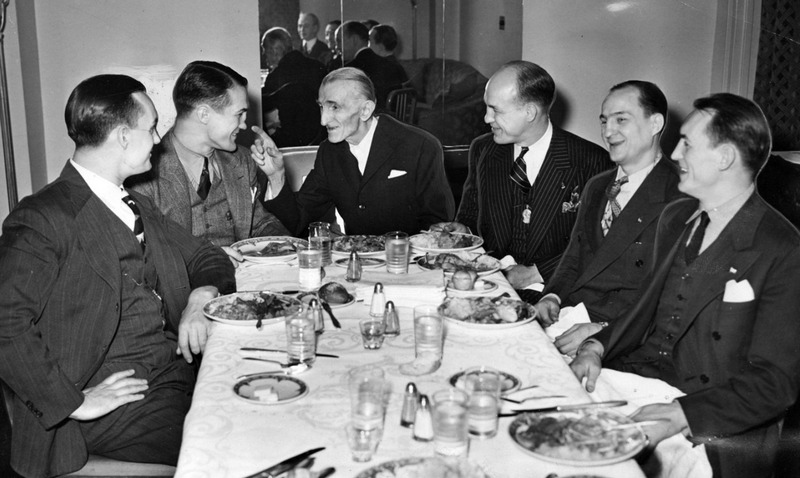
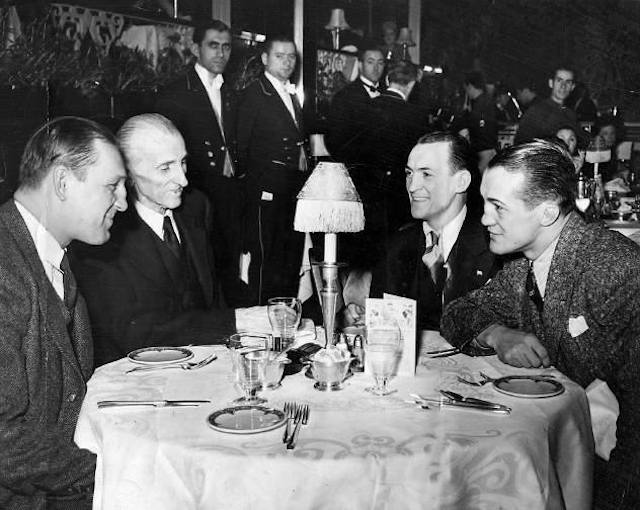
In 1941 Nikola Tesla invited to lunch with him in New York a famous Croatian-American boxer Fritzie Zivich,
known under the pseudonym The Croat Comet (as well as his brothers, who were also boxers),
after his successful defense of the world title in welter-weight category.
Source newsinteractive.post-gazette.com.
From left to right: Joe Zivic, Fritzie Zivic, Nikola Tesla, Jack Zivic, Pete Zivic and Eddie Zivic.
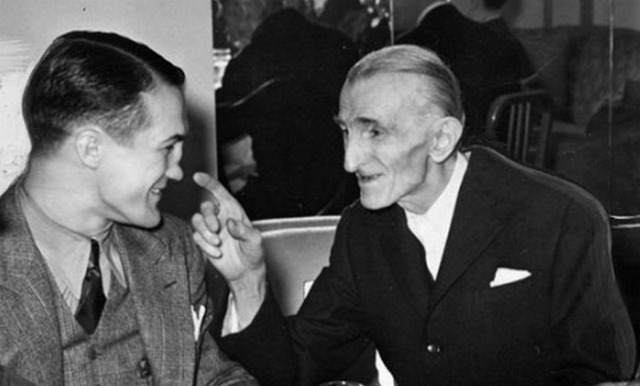
The Croat Comet Fritzie Zivich (originally Živčić) and Nikola Tesla
Fritzie Zivic was inducted to the International Boxing Hall of Fame in 1993.
| During his 1893 lecture in St. Louis, Nikola Tesla showed for the first time in history the fundamentals of Radio Technology and of Wireless Communication. This is described in detail by Margareth Cheney in her monograph Tesla / Man Out of Time (published in 1981), in Chapter 6 entitled “Radio”. From that monograph, we learn that during his public lecture in St. Louis, Nikola Tesla had the assistant Henry Primm Broughton (1865-1959). Henry’s son William Gundry Broughton (1902-1994), in his public lecture delivered in 1976, informed about experiments assisted by his father Henry, proving without any doubt that Tesla should be credited for the discovery of Radio Technology and Wireless communication. See Chapter 6 (“Radio”) of the aforementioned monograph by Margaret Cheney. Here, we quote the following short passage from her book:
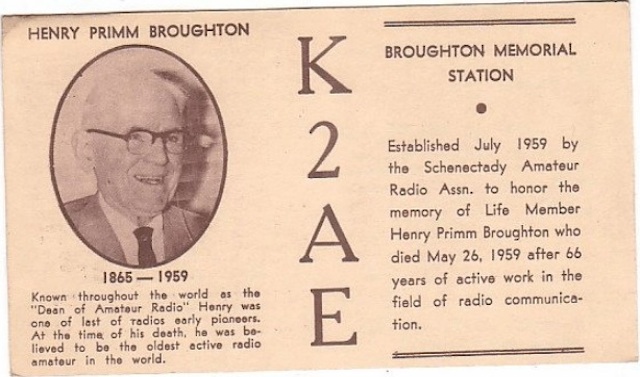
Margaret Cheney Predecessors of the idea of radio prior to Nikola Tesla were Joseph Henry (1840, the unit of inductance was named after him), Samuel Morse (Morse telegraphy, 1844), James Clerk Maxwell (with his theoretical discovery of electromagnetic waves, 1864), Mahlon Loomis (1865), Alexander Graham Bell (the first practical telephone and headset, 1876), William Preece (1885), Heinrich Rudolph Hertz (experimental confirmation of existence of electromagnetic waves, 1887-1888), Edouard Branly (coherer, 1890). Nikola Tesla was born in Croatia in 1856, where he lived until the age of 19 (i.e., until 1875). He spent the last two thirds of his life (that is, nearly 60 years) in the USA, where he died in 1943. He also lived in Austria, Hungary, France, Germany, Slovenia, during about eight years. Henry Primm Broughton K2AE (1865-1959) Henry Primm Broughton, distinguished American radio-amater,
and Tesla’s assistant in St. Louis during his lecture in 1893.
In 1997, The Schenectady ARA INC. (ARA = American Radio Association) established a scholarship intended to honor the memory of Henry P. Broughton, K2AE, whose early work with Nikola Tesla exemplified the pioneering efforts of early radio experimenters and who was a distinguished member of the club. |
Navodimo zanimljiv primjer iz knjige “Nikola Tesla” ruskog auktora koji se zove Grant Konstantinovič Cverava, koji pri kraju str. br. 47 citira Františeka Žureka, Čeha koji se u Pragu upoznao s Teslom (s ruskog izvornika preveo DŽ):
Prilažemo izvornik na ruskom jeziku: 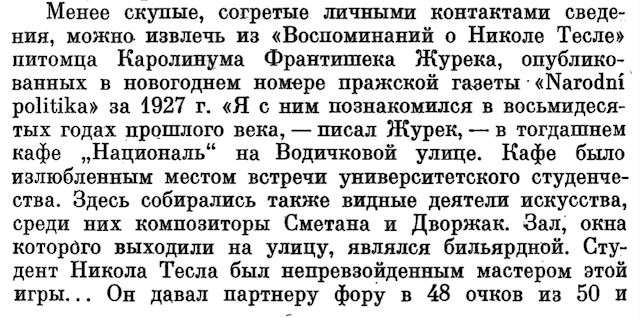 Na početku sljedeće str. br. 48 čitamo sljedeće: 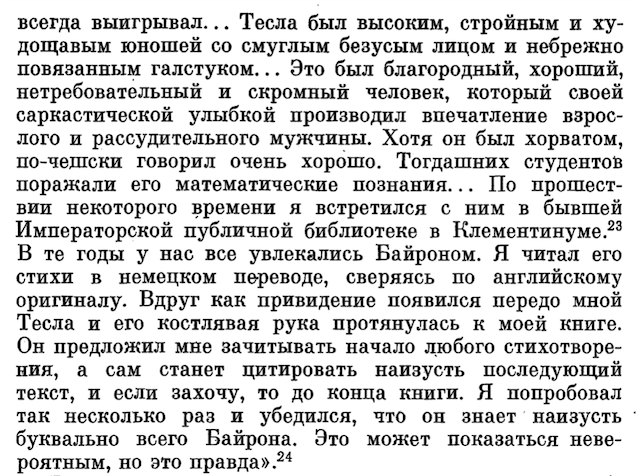 Evo i bilježke br. 24 na dnu str. 48: 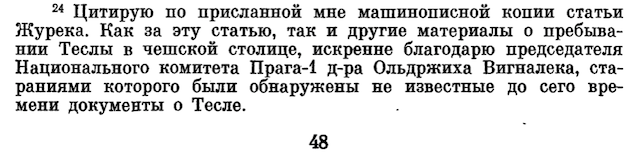 Zahvaljujem g. Mariu Filipiju na informaciji o svjedočenju Františeka Žureka objavljenom u knjizi “Nikola Tesla” koju je napisao Grant Konstantinovič Cverava 1974. |


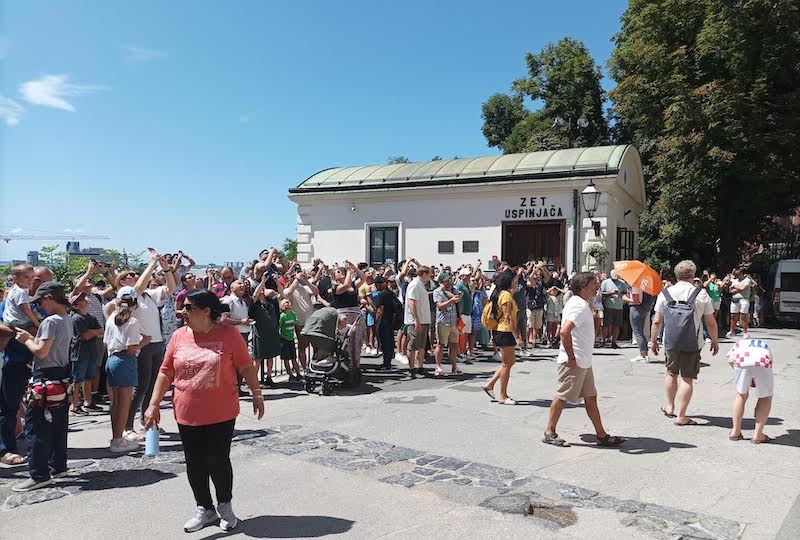

The Zagreb City Assembly is near the church of St. Mark, on the right the building of Sabor – Croatian Deit,
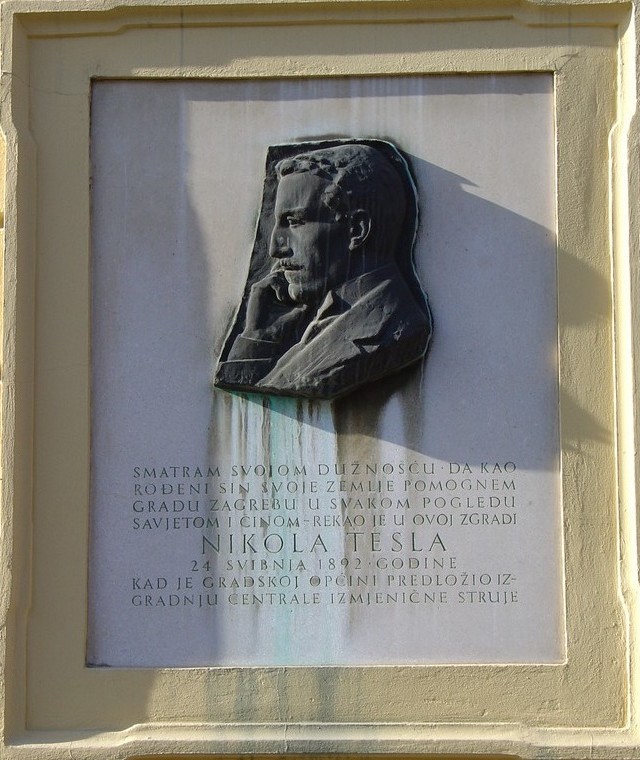
pomognem gradu Zagrebu u svakom pogledu savjetom i činom.
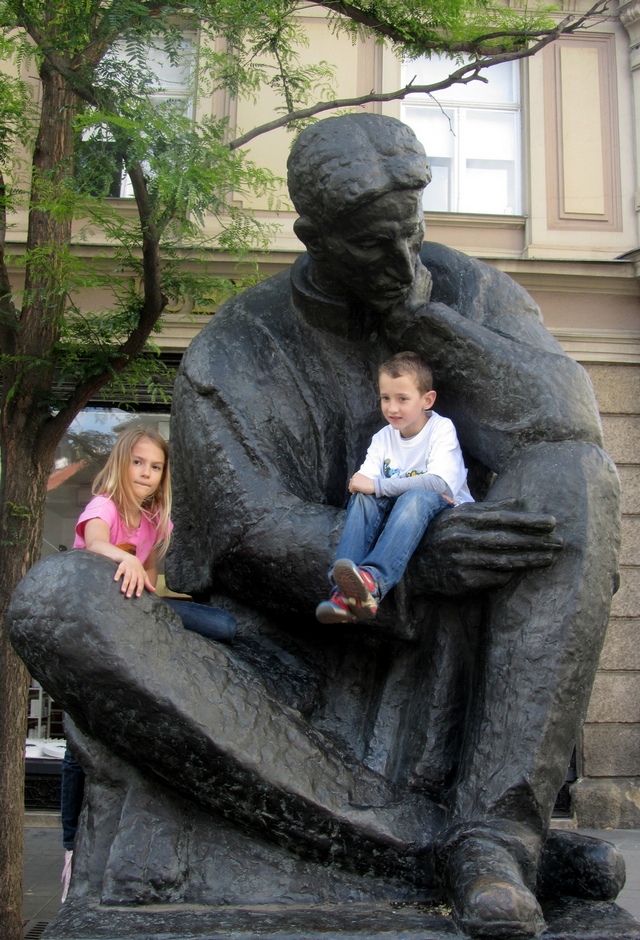
Spomenik Nikole Tesle koji je napravio Ivan Meštrović, najveći hrvatski kipar u povijesti.
Postavljen je u Zagrebu. (Izvor fotografije Flickr.)
Sasvim blizu tog spomenika nalazi se ulica Nikole Tesle u Zagrebu.
| Ivan Meštrović, distinguished Croatian-American sculptor, about Nikola Tesla Ivan Meštrović, distinguished Croatian sculptor, wrote the following about Tesla’s idealism:
Ivan Meštrović: Uspomene na političke ljude i dogadjaje (Reminiscences of Political People and Events), Buenos Aires, 1961., Knjižnica Hrvatske revije. (pp. 191-193); or Matica hrvatska, Zagreb 1969 (pp. 169-170) |
